1
Oboe Concerto in D Minor, SF.935
The famous Adagio (transcribed by Bach) provides an unforgettable introduction to Marcello's melodic genius and remains instantly accessible to any listener.
1673–1747
13 works
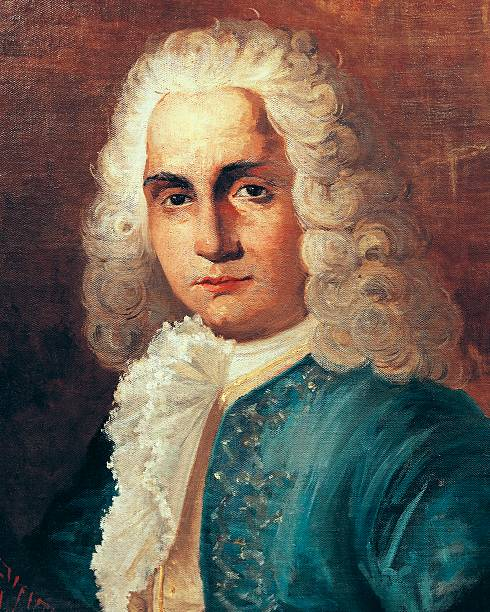
Alessandro Marcello remains one of the Baroque's most elegant enigmas—a Venetian nobleman who composed as an avocation yet created music of such refinement that his Oboe Concerto in D Minor became a Baroque icon (often misattributed to his more famous brother Benedetto). His concertos and cantatas reveal a composer of exquisite taste and melodic invention, favoring noble simplicity over virtuosic display. Marcello represents the sophisticated amateur tradition at its finest, creating art that transcends categories.
0 concerts featuring works by this composer
No upcoming performances scheduled for works by Alessandro Marcello.
New to Alessandro Marcello? These works make great entry points.
The famous Adagio (transcribed by Bach) provides an unforgettable introduction to Marcello's melodic genius and remains instantly accessible to any listener.
The bright D major tonality and dialogue between two oboes offers an immediately appealing entry point to Marcello's concerto style.
This chamber work's intimacy and melodic clarity make it ideal for discovering Marcello's refined sensibility in a more private context.
Add to Spotlight to be notified when a piece is scheduled near you.
The works that define Alessandro Marcello's legacy.
This concerto's heartbreaking Adagio is one of the Baroque's most perfectly formed slow movements, demonstrating Marcello's gift for sustained lyrical inspiration.
This concerto from his published collection showcases the full range of his compositional craft with inventive ritornellos and expressive slow movements.
Serenata ad Irene from 12 Cantate
This cantata reveals Marcello's vocal writing, demonstrating that his melodic gifts extended beyond instrumental music to elegant vocal lines.
Musical style, influences, and more
Marcello's music is characterized by long-breathed melodies of exceptional beauty, particularly in slow movements that become extended songs without words. His harmonic language is diatonic and graceful, favoring smooth voice-leading and elegant modulations over dramatic gestures. The orchestration is transparent and balanced, letting solo instruments sing with minimal accompaniment. His style synthesizes Venetian lyricism with elements of the emerging galant aesthetic.
As a member of Venice's patrician class and the Arcadian Academy (under the pseudonym Eterio Stinfalico), Marcello moved in elite artistic circles alongside poets, painters, and fellow dilettantes. His relationship with his younger brother Benedetto—who became the more publicly successful composer—remains intriguing; both drew on Venetian instrumental traditions established by Vivaldi and Albinoni. Johann Sebastian Bach transcribed Alessandro's Oboe Concerto for keyboard, cementing its place in the repertoire.
As an amateur composer who never sought publication or professional performance, Marcello's creative trajectory is harder to trace than professional contemporaries'. His works likely circulated in manuscript among Venice's elite musical circles. The concertos and cantatas show consistent craftsmanship rather than dramatic stylistic evolution, suggesting a mature style refined over decades rather than radical innovation—the work of a perfectionist content to polish rather than proliferate.
For centuries, Marcello's most famous work—the Oboe Concerto in D Minor—was attributed to his brother Benedetto, and even today some catalogs list it under both names; modern scholarship has firmly established Alessandro's authorship, yet the confusion persists, perhaps fitting for a composer who cultivated aristocratic anonymity over professional recognition.
Marcello was also an accomplished poet, mathematician, and visual artist, publishing poetry under his Arcadian pseudonym Eterio Stinfalico and engaging seriously with mathematical and philosophical questions—his music represents just one facet of a true Renaissance man born in the Baroque era.
The Oboe Concerto in D Minor appears regularly in Baroque programs, though often still misattributed or credited to 'A. Marcello' without clarification. The rest of his output remains largely the province of specialist Baroque ensembles and oboe recitalists exploring repertoire beyond Vivaldi and Albinoni. There's room for rediscovery, particularly the double oboe concertos which offer fresh alternatives to the overplayed Vivaldi works.
13 works in catalog
Browse the catalog below. Add any work to your Spotlight to track when it is performed live.
Showing 13 of 13 works