1
In the Steppes of Central Asia
This tone poem's evocative depiction of a caravan crossing the steppes provides an ideal seven-minute introduction to Borodin's melodic gifts and exotic colors.
1833–1887
30 works
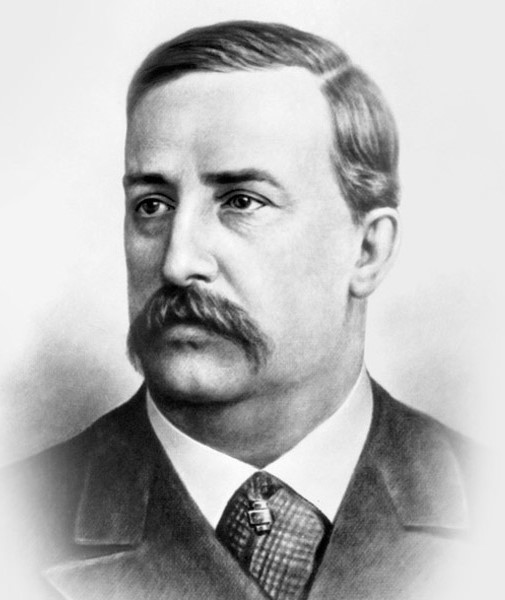
Alexander Borodin was the ultimate Sunday composer—a distinguished chemist who created some of Russian music's most indelible melodies in his spare time. His music radiates warmth and exotic color, drawing on Central Asian and Russian folk materials with a richness that influenced everyone from Debussy to Broadway composers. Borodin proved that slow, patient craftsmanship could yield immortal works, even if he finished fewer pieces than his full-time composer colleagues.
0 concerts featuring works by this composer
No upcoming performances scheduled for works by Alexander Borodin.
New to Alexander Borodin? These works make great entry points.
This tone poem's evocative depiction of a caravan crossing the steppes provides an ideal seven-minute introduction to Borodin's melodic gifts and exotic colors.
The sheer melodic abundance and colorful orchestration make this an instantly appealing entry point to Borodin's world.
This single movement's lyrical beauty has made it a concert staple, offering perfect access to Borodin's chamber music.
Add to Spotlight to be notified when a piece is scheduled near you.
The works that define Alexander Borodin's legacy.
This symphony epitomizes Russian nationalism with its heroic opening, tender slow movement, and thrilling finale featuring the famous 'Bogatyr' theme—it's Borodin's orchestral masterpiece.
These exotic dances have achieved immortality both in the opera house and concert hall, capturing the seductive allure of the East with unforgettable melodies.
The Nocturne movement became one of the 19th century's most beloved chamber music selections, while the complete quartet shows Borodin's lyrical genius in intimate form.
Musical style, influences, and more
Borodin's music is characterized by sweeping, long-breathed melodies of exceptional beauty, often modal or folk-derived, and lush orchestration that favors warm string sonorities and exotic woodwind colors. His harmony blends Western chromaticism with Russian modal inflections and whole-tone passages that anticipate Impressionism. The orchestration is rich but never heavy, creating shimmering textures particularly in depictions of the steppes and Eastern scenes.
As a member of the Mighty Five alongside Balakirev (his mentor), Cui, Mussorgsky, and Rimsky-Korsakov, Borodin championed nationalist ideals while absorbing Western models—particularly Schumann, Mendelssohn, and Liszt. His scientific colleague Dmitri Mendeleev (creator of the periodic table) was a close friend, representing the intersection of science and art in Borodin's life. Glazunov completed and orchestrated Prince Igor after Borodin's death, cementing the work's place in the repertoire.
Borodin's compositional career was perpetually interrupted by his demanding scientific work and teaching responsibilities. Early works show German Romantic influence before the nationalist aesthetic took hold in the 1860s-70s. His mature period produced the two symphonies, two string quartets, and the incomplete Prince Igor—each work meticulously crafted over years rather than months, resulting in highly polished, fully realized works even if the total output remained small.
Borodin composed only when illness kept him from his chemistry laboratory—his friends darkly joked that they were glad when he got sick because it meant he'd write music; he literally died at a costume ball, dressed as a peasant, collapsing mid-celebration at the height of his creative powers.
Borodin was a pioneering advocate for women's medical education in Russia, founding medical courses for women and fighting for their professional equality—his progressive politics and scientific rigor coexisted with Romantic musical sensibilities, making him a true Renaissance figure.
Borodin appears regularly on orchestral programs, particularly the Second Symphony, Polovtsian Dances, and In the Steppes of Central Asia. The string quartets are chamber music staples, especially the Second Quartet's Nocturne. Prince Igor receives less frequent full productions but the Polovtsian Dances appear constantly. There's room for exploring the songs and the underperformed Symphony No. 1.
30 works in catalog
Browse the catalog below. Add any work to your Spotlight to track when it is performed live.
Showing 30 of 30 works