1
Die Seejungfrau
This early symphonic fantasy based on Hans Christian Andersen's Little Mermaid offers immediate access to Zemlinsky's lush orchestration and melodic gifts.
1871–1942
57 works
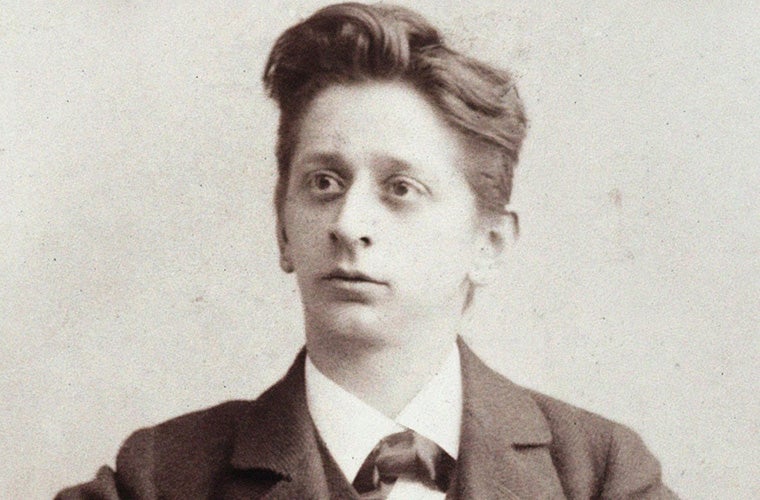
Alexander von Zemlinsky was Schoenberg's teacher, Mahler's protégé, and Alma Schindler's first love—yet his music somehow fell into obscurity until recent decades revealed him as one of late-Romanticism's most sophisticated voices. His operas and orchestral works blend Brahmsian craftsmanship with Straussian opulence and touches of emerging modernism, creating a unique position between tradition and revolution. Zemlinsky's rediscovery ranks among the 20th century's most rewarding musical rehabilitations—here's a composer who deserves to stand alongside the masters who overshadowed him.
0 concerts featuring works by this composer
No upcoming performances scheduled for works by Alexander von Zemlinsky.
New to Alexander von Zemlinsky? These works make great entry points.
This early symphonic fantasy based on Hans Christian Andersen's Little Mermaid offers immediate access to Zemlinsky's lush orchestration and melodic gifts.
These songs for voice and orchestra bridge the worlds of Mahler and early Schoenberg, offering beautiful melodies within accessible late-Romantic frameworks.
These art songs reveal Zemlinsky's gift for text-setting and harmonic subtlety in intimate form, perfect for discovering his lyrical sensibility.
Add to Spotlight to be notified when a piece is scheduled near you.
The works that define Alexander von Zemlinsky's legacy.
This song-symphony for soprano, baritone, and orchestra influenced Berg's Lyric Suite and stands as Zemlinsky's orchestral masterpiece, blending Mahler's symphonic song cycles with Straussian opulence.
This quartet epitomizes Zemlinsky's mature chamber style, combining Brahmsian rigor with late-Romantic expressivity and harmonic sophistication that rivals Schoenberg's tonal works.
This one-act opera based on Oscar Wilde showcases Zemlinsky's dramatic gifts and rich orchestration in a taut, psychologically intense music drama.
Musical style, influences, and more
Zemlinsky's music is characterized by lush, chromatic harmonies that push tonality to its limits without abandoning it entirely, and orchestration of extraordinary richness and subtlety learned from Mahler and Strauss. His chamber works show Brahmsian rigor while his operas display theatrical flair, and throughout runs a vein of melancholy and yearning that gives even his most complex works emotional directness. The harmonic language grows progressively more adventurous across his career while maintaining expressive clarity.
Zemlinsky taught Arnold Schoenberg counterpoint and composition, with their relationship evolving into mutual artistic respect and family connection when Schoenberg married Zemlinsky's sister. Gustav Mahler championed Zemlinsky's operas in Vienna, providing crucial support and influence. Zemlinsky also taught Erich Wolfgang Korngold, Alma Mahler (briefly), and influenced Berg and Webern through his work with Schoenberg—he stood at the nexus of Viennese modernism while maintaining his own path.
Early works show late-Romantic influence with increasing chromaticism through the 1900s-1910s, culminating in masterpieces like the Lyric Symphony. His middle period embraced a more condensed, intense style in works like the String Quartets and the opera Der Kreidekreis. Exile from Nazi Europe in 1938 curtailed his late period, though works like the String Quartet No. 4 show undiminished powers despite displacement and declining health.
Zemlinsky was engaged to the beautiful and talented Alma Schindler, but she broke it off to marry Gustav Mahler, reportedly finding Zemlinsky physically unattractive—this rejection haunted Zemlinsky, and many hear its echoes in works like The Dwarf (Der Zwerg), an opera about an ugly dwarf who wins a princess's pity but not her love.
Zemlinsky was an acclaimed opera conductor who led premieres of works by Schoenberg, Schreker, and others at the Prague German Theatre and Vienna Volksoper—his dual career as conductor-composer gave him theatrical insights that infuse even his instrumental works with dramatic narrative arc.
Zemlinsky's rehabilitation since the 1970s has been remarkable, with the Lyric Symphony and string quartets entering the repertoire and operas receiving acclaimed productions. The string quartets appear regularly on chamber music programs, while orchestras increasingly program Die Seejungfrau and other orchestral works. The operas remain rarities but generate excitement when mounted—particularly Eine florentinische Tragödie and Der Zwerg (The Dwarf).
57 works in catalog
Browse the catalog below. Add any work to your Spotlight to track when it is performed live.
Showing 30 of 57 works