1
Impromptu
This piano miniature offers an ideal introduction to de Larrocha's lyrical voice and keyboard fluency in accessible, Romantic-inflected form.
1923–2009
1 work
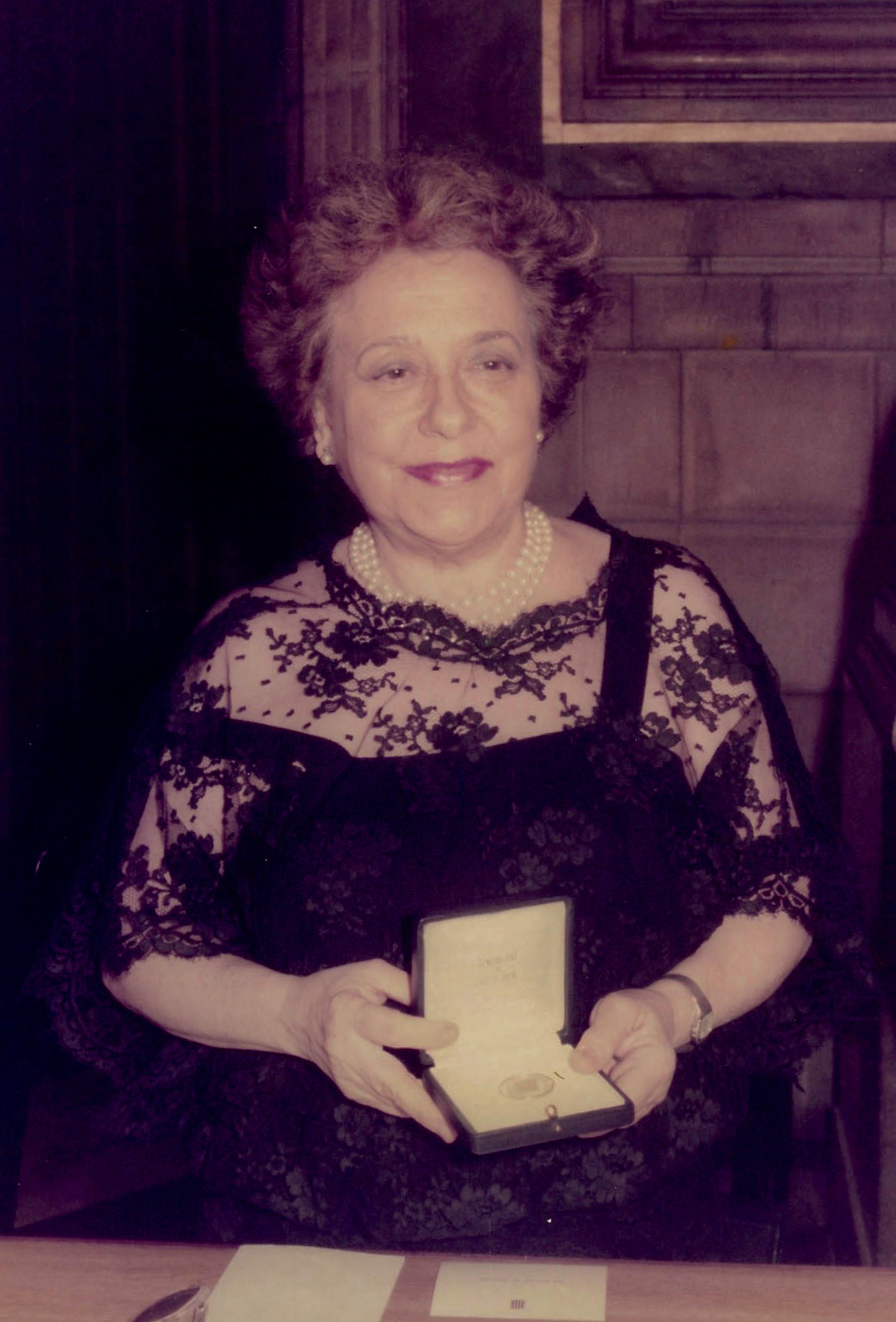
While the world knew Alicia de Larrocha as the 20th century's greatest interpreter of Spanish piano music, few realized she was also a composer who created charming works in her youth. From ages seven to thirty, she wrote piano miniatures, songs, and chamber pieces for her own pleasure and for family and friends, calling them her 'sins of youth.' These recently-discovered compositions reveal a musical mind shaped by the Spanish repertoire she championed—works of genuine charm influenced by Granados, Albéniz, Mompou, and Turina that deserve attention beyond their historical curiosity.
0 concerts featuring works by this composer
No upcoming performances scheduled for works by Alicia de Larrocha.
New to Alicia de Larrocha? These works make great entry points.
This piano miniature offers an ideal introduction to de Larrocha's lyrical voice and keyboard fluency in accessible, Romantic-inflected form.
Canço d'un doble amor (song)
The folksy melody and neo-Gershwin harmonies make this song immediately appealing while showcasing de Larrocha's gift for setting Catalan poetry.
Ten Inventions (1939)
These Bach-inspired pieces reveal de Larrocha's contrapuntal skill and provide charming entry points that any pianist who's studied Bach's Inventions will appreciate.
Add to Spotlight to be notified when a piece is scheduled near you.
The works that define Alicia de Larrocha's legacy.
Violin Sonata in three movements
The gorgeous Adagio second movement, packed with harmonic intensity, shows de Larrocha could achieve emotional depth beyond the modest scope of her other works.
Songs (collection)
Works like 'Canço d'un doble amor' and 'Maite' represent her strongest compositions, displaying folksy tunefulness and sophisticated harmonic language in perfect balance.
Suite in four movements (1939)
This early work shows delightful faux-Scarlatti neoclassicism, demonstrating the young de Larrocha's command of Baroque style filtered through 20th-century sensibility.
Musical style, influences, and more
De Larrocha's compositions show sophisticated keyboard texture and excellent harmonic sense absorbed from Spanish piano literature, blending neo-classical clarity with Romantic lyricism. Her piano works range from faux-Scarlatti inventions to character pieces echoing Schumann, while her songs display folksy tunefulness with neo-Gershwin harmonies. The style is modest in ambition but sincere in expression, favoring elegant craftsmanship over dramatic gestures and showing particular strength in lyrical, slower movements.
De Larrocha studied composition with Riccardo Lamote de Grignon at the Marshall Academy in Barcelona, learning counterpoint and the glories of Baroque technique. Her immersion in Spanish piano repertoire—particularly Granados (whose disciple Frank Marshall was her piano teacher), Albéniz, Turina, Mompou, and Falla—shaped her compositional voice. The cosmopolitan atmosphere of 1930s-40s Barcelona, where neoclassicism and Spanish nationalism coexisted, influenced her eclectic aesthetic.
De Larrocha's most prolific composing period occurred in her late teens (1939-1941), producing suites, inventions, and a violin sonata showing neoclassical influence. Her 1940s output included songs and character pieces with more Romantic flavor. By her thirties, composition gave way entirely to her performing career, though she never destroyed her youthful works and occasionally played them privately for family.
De Larrocha composed prolifically between ages 17-18 during what her daughter called 'the effervescence of youth and romanticism,' then gradually stopped composing by age 30 as her performing career consumed her energy—she downplayed these works as mere anecdotes, yet allowed her family to decide whether to publish them posthumously, suggesting she didn't entirely disown her compositional efforts.
One of de Larrocha's pieces, 'Festívola' (which she called 'Danza—a Sin of Youth'), received a public performance at Hunter College in New York in 1970, three decades after composition—for years this was thought to be the last performance of any of her works until the recent posthumous release revealed her compositional output.
De Larrocha's compositions were virtually unknown until a complete recording was released posthumously (following her family's decision to make them public). They appear primarily on programs exploring pianist-composers or Spanish music history. The songs and piano miniatures suit recital encores or teaching repertoire. There's potential for these works to find a place in Spanish music programming as historical curiosities that also possess genuine musical charm.
1 works in catalog
Browse the catalog below. Add any work to your Spotlight to track when it is performed live.
Showing 1 of 1 works