1
The Enchanted Lake, Op. 62
This seven-minute tone poem provides perfect introduction to Liadov's atmospheric magic and refined orchestration in immediately beautiful form.
1855–1914
1 work
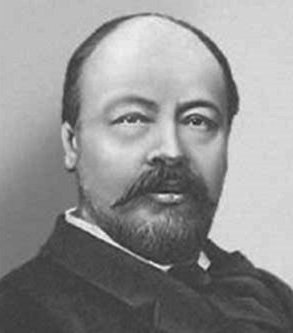
Anatoly Liadov was Russian music's great miniaturist—a composer who created exquisite orchestral tone poems and piano pieces of such refined craftsmanship that Diaghilev initially commissioned him (not Stravinsky) to write The Firebird. His procrastination and perfectionism lost him that commission, but his three Russian fairy-tale tone poems—Baba Yaga, Kikimora, and The Enchanted Lake—remain magical evocations of folklore and nature that influenced everyone from Stravinsky to Debussy. Liadov proves that a small output of perfect miniatures can matter more than prolific mediocrity.
0 concerts featuring works by this composer
No upcoming performances scheduled for works by Anatoly Liadov.
New to Anatoly Liadov? These works make great entry points.
The Enchanted Lake, Op. 62
This seven-minute tone poem provides perfect introduction to Liadov's atmospheric magic and refined orchestration in immediately beautiful form.
Eight Russian Folksongs for Orchestra, Op. 58
These miniature orchestrations reveal Liadov's gift for instrumental color while showcasing Russian melodic materials in accessible settings.
Baba Yaga, Op. 56
The vivid programmatic content and brilliant orchestration make this an ideal gateway to Liadov's fairy-tale works.
Add to Spotlight to be notified when a piece is scheduled near you.
The works that define Anatoly Liadov's legacy.
The Enchanted Lake, Op. 62
This atmospheric tone poem creates a shimmering, static sound-world of extraordinary delicacy, capturing moonlit water with orchestral magic that anticipates Debussy.
Baba Yaga, Op. 56
This vivid depiction of the witch from Russian folklore showcases Liadov's gift for musical storytelling and colorful orchestration in concentrated, brilliant form.
Kikimora, Op. 63
This tone poem portraying an evil spirit demonstrates Liadov's ability to create character and atmosphere through crystalline orchestration and distinctive harmonies.
Musical style, influences, and more
Liadov's music features crystalline orchestration of extraordinary delicacy and precision, favoring transparent textures and distinctive instrumental colors over massive sonorities. His harmonic language blends Russian modal inflections with French impressionist techniques, creating shimmering, atmospheric effects. Formal structures tend toward compact, perfectly proportioned miniatures rather than extended development, with every note serving maximum expressive purpose through economy of means.
Liadov studied with Rimsky-Korsakov at the St. Petersburg Conservatory and later taught there himself, instructing Prokofiev, Myaskovsky, and Asafiev among others. He belonged to the circle around Rimsky-Korsakov and Balakirev, absorbing Russian nationalist aesthetics while developing his own refined, miniaturist approach. His friendship with Glazunov and influence on the young Stravinsky (who attended his classes) positioned him at the center of Russian musical life despite his small output.
Early works show Rimsky-Korsakov's influence before Liadov developed his mature miniaturist style in the 1890s. His most creative period came in his final decade (1904-1914) when he composed his three orchestral fairy-tale poems and finest piano pieces. Throughout his career he published extensively, edited Russian folk song collections, and taught, but composed relatively little due to perfectionism and lack of urgency—quality over quantity defined his approach.
When Diaghilev commissioned Liadov to write The Firebird ballet in 1909, the composer's legendary procrastination meant he'd barely started when the premiere date approached—Diaghilev frantically turned to the young, unknown Stravinsky instead, launching one of music history's greatest careers while Liadov's indolence cost him immortality.
Liadov was one of Russia's most important folk song collectors and editors, publishing several volumes that preserved traditional melodies and influenced how Russian composers incorporated folk materials—this scholarly work shaped Russian nationalism's musical foundations as much as his compositions did.
Liadov's three orchestral fairy-tale poems appear regularly on Russian music programs and as orchestral encores, with The Enchanted Lake particularly beloved. The piano miniatures are championed by Russian music specialists but deserve wider recognition. His music represents the refined, miniaturist alternative to his contemporaries' grand symphonic ambitions, offering concentrated perfection that never overstays its welcome.
1 works in catalog
Browse the catalog below. Add any work to your Spotlight to track when it is performed live.
Showing 1 of 1 works