1
Symphony No. 4 in E-flat Major, WAB 104 'Romantic'
The most accessible Bruckner symphony, featuring a hunting-horn opening and relatively straightforward narrative arc ideal for newcomers.
1824–1896
60 works · 2 upcoming works performed
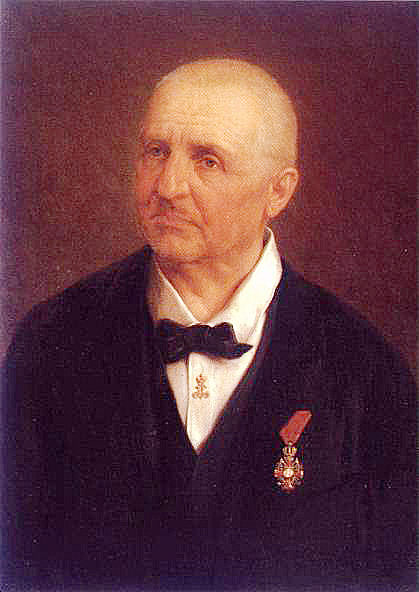
Anton Bruckner created cathedrals in sound—symphonies of spiritual grandeur and architectural majesty that require patience but reward it with transcendent experiences unlike anything else in music. This devout Austrian organist and teacher spent decades perfecting his craft, enduring critical mockery while building monuments that now stand among the 19th century's greatest achievements. Bruckner's music offers a unique fusion of Wagnerian harmony, Baroque polyphony, and Catholic mysticism, creating a sound-world where massive brass chorales alternate with string whispers and silences feel as eloquent as climaxes.
2 concerts featuring works by this composer
Never miss a Bruckner performance
Get notified when new concerts are announced near you
New to Anton Bruckner? These works make great entry points.
The most accessible Bruckner symphony, featuring a hunting-horn opening and relatively straightforward narrative arc ideal for newcomers.
This exquisite motet for unaccompanied choir provides perfect introduction to Bruckner's sacred music in concentrated, beautiful four-minute form.
The most frequently performed Bruckner symphony combines grandeur with lyricism, offering ideal balance for listeners new to his symphonic world.
Add to Spotlight to be notified when a piece is scheduled near you.
The works that define Anton Bruckner's legacy.
This symphony epitomizes Bruckner at his most serene and transcendent, featuring the famous Adagio written as Wagner lay dying—a valediction of overwhelming beauty.
Left incomplete with three monumental movements, this stands as Bruckner's spiritual testament—particularly the Adagio, one of music's most profound meditations on mortality.
This massive choral-orchestral setting demonstrates Bruckner's sacred music at its most powerful, rivaling the symphonies in spiritual intensity and architectural grandeur.
Musical style, influences, and more
Bruckner's symphonies feature vast, block-like structures with abrupt contrasts rather than smooth transitions, creating architecture in sound inspired by his beloved Gothic cathedrals. The harmonic language fuses Wagner's chromatic adventurousness with diatonic simplicity, often featuring unisons and octaves of startling directness. Orchestration favors brass chorales of overwhelming power alternating with hushed string passages, while rhythm often builds through repeated motifs that accumulate tension before massive releases—silence becomes structural element rather than absence.
Bruckner studied with Simon Sechter and Otto Kitzler, absorbing both rigorous counterpoint and Wagnerian harmony. His devotion to Wagner (whom he revered as a god) shaped his orchestral thinking, though Bruckner's spiritual concerns differ vastly from Wagner's mythological dramas. As a teacher at the Vienna Conservatory, he instructed Mahler (who conducted his works) and others, though his own music faced critical hostility during his lifetime. The tension between Brahmsian and Wagnerian factions in Vienna made Bruckner's career difficult.
Bruckner came late to symphonic composition, writing his first numbered symphony at 42 after years as organist and church musician. Early symphonies (Nos. 1-3) established his style amid critical hostility. The middle period (Nos. 4-6) brought growing confidence despite constant revisions forced by well-meaning but misguided 'helpers.' Late works (Nos. 7-9) achieved apotheosis, with the Ninth left incomplete at his death—three monumental movements that stand as his spiritual testament.
When Bruckner met Wagner and tried to give him the manuscript of his Third Symphony, Wagner was too busy to look at it properly—so Bruckner, in awe of his idol, left it anyway and counted it among his life's greatest honors when Wagner accepted the dedication, even though Wagner probably never studied the score carefully.
Bruckner was a phenomenal organist who improvised for hours, and his symphonies' architecture directly reflects organ registration and sonority—those massive tutti passages are essentially full organ, while delicate string sections represent soft stops, making his symphonies essentially transcriptions of cosmic improvisations for the grandest instrument imaginable.
Bruckner appears regularly on symphony orchestra programs, though less frequently than Brahms or Mahler. The Fourth and Seventh Symphonies are most common, with the Ninth gaining ground. Version issues (original vs. revised editions) complicate programming but also create interest. There's been a Bruckner renaissance in recent decades, with conductors championing complete cycles and audiences discovering these works' spiritual depths. The sacred choral works deserve more frequent performance.
60 works in catalog
Browse the catalog below. Add any work to your Spotlight to track when it is performed live.
Showing 30 of 60 works