1
Adagio from Spartacus Ballet
Heartbreakingly beautiful, this movement became famous as the theme for The Onedin Line—romantic string writing at its most lush.
1903–1978
48 works
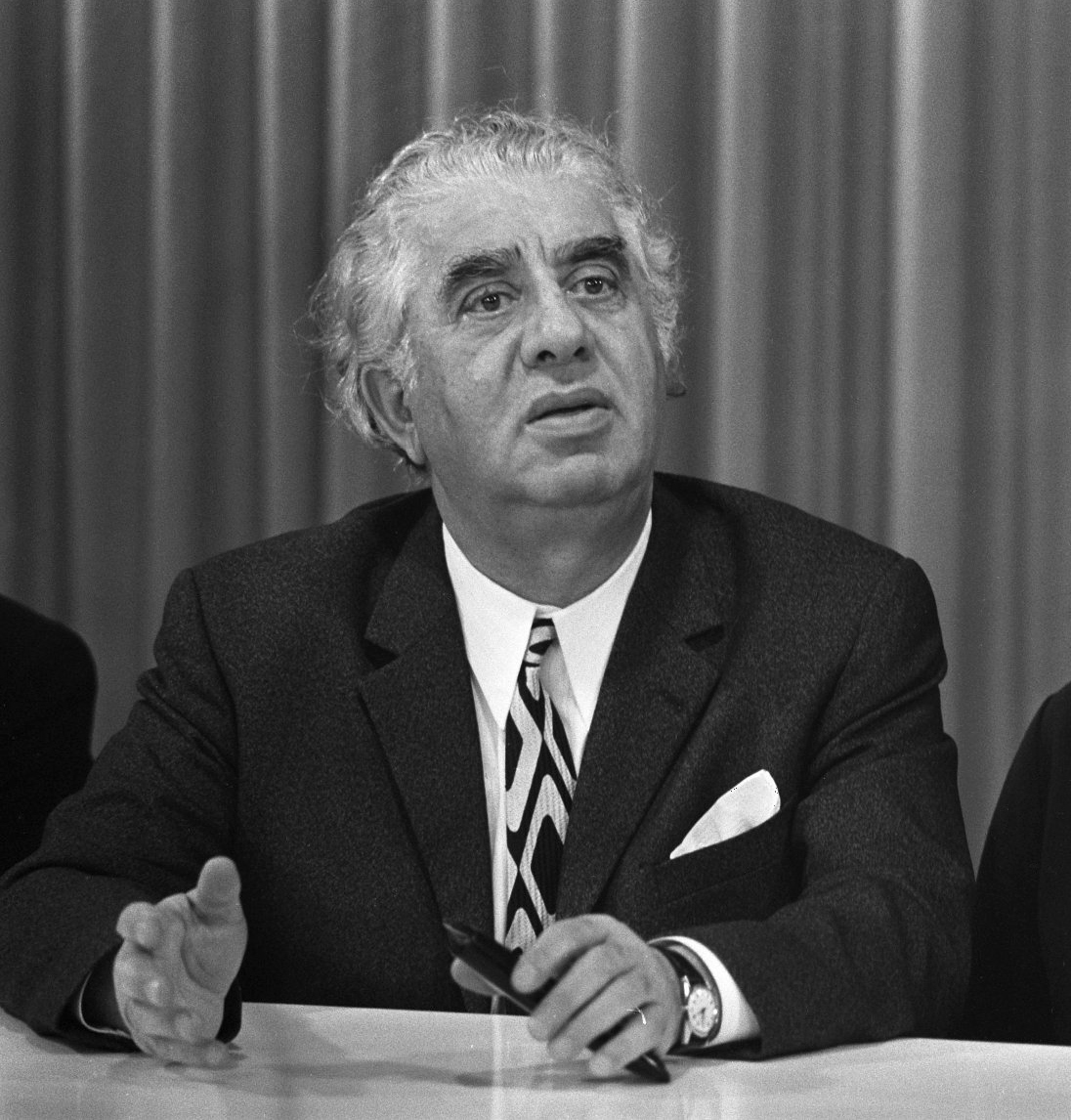
The composer who made Soviet music dance, Khachaturian fused Armenian folk traditions with Russian symphonic heft and balletic brilliance. His Sabre Dance became one of classical music's most recognizable tunes, but beyond the hit lies a catalog of colorful, emotionally direct music rooted in Caucasian melodies and rhythms. He proved Soviet realism could be both ideologically correct and genuinely exciting.
0 concerts featuring works by this composer
No upcoming performances scheduled for works by Aram Khachaturian.
New to Aram Khachaturian? These works make great entry points.
Heartbreakingly beautiful, this movement became famous as the theme for The Onedin Line—romantic string writing at its most lush.
Charming incidental music that captures old Tbilisi with waltzes and dances of elegant nostalgia—Khachaturian at his most refined.
Sabre Dance from Gayane
Yes, it's overexposed, but there's a reason it's iconic—two minutes of pure rhythmic adrenaline that never fails to thrill.
Add to Spotlight to be notified when a piece is scheduled near you.
The works that define Aram Khachaturian's legacy.
Gayane Ballet Suite (including Sabre Dance)
His most famous work beyond the hit single, the full suite reveals his gift for character dance and orchestral color in service of narrative.
A passionate showpiece that balances Armenian melodic character with virtuoso demands, beloved by soloists for its romantic sweep.
Thunderous, brilliant, and unapologetically virtuosic—a concerto that captures both Soviet grandiosity and Armenian lyricism.
Musical style, influences, and more
Khachaturian's music pulses with dance rhythms, modal Armenian melodies, and brilliant orchestral color that evokes exotic Eastern sonorities. His harmonic language balances tonal clarity with spicy chromaticism and modal inflections. The textures are thick, the melodies memorable, the rhythms visceral—music that wears its heart on its orchestral sleeve without apology.
Studied with Myaskovsky at the Moscow Conservatory, absorbing Russian symphonic traditions. His Armenian heritage provided endless melodic and rhythmic material that he synthesized with Western forms. Influenced by Rimsky-Korsakov's orientalism and Prokofiev's rhythmic vitality. His work paralleled Shostakovich and Prokofiev but maintained a more overtly folk-based, optimistic style.
Early works explored Armenian folk material in small forms. His ballet Gayane (containing Sabre Dance) brought international fame and official approval. The Violin Concerto and symphonies showed growing mastery of large-scale forms. Later works faced official censure during the 1948 formalism crackdown but he adapted, maintaining productivity. Late period saw increased international conducting and continued refinement of his colorful, folk-inflected style.
Sabre Dance became so popular that Khachaturian grew to resent it, feeling it overshadowed his more substantial achievements. Yet he couldn't escape it—the piece appeared in cartoons, films, commercials, and even as a rock and roll cover, making him one of the most widely heard but least deeply known classical composers.
Khachaturian didn't seriously study music until age 19, considered extremely late for a conservatory composer. He initially came to Moscow to study biology, only discovering his musical vocation by accident when he heard a concert that changed his life.
The concertos remain popular with soloists seeking romantic display pieces. Ballet suites appear regularly, though programmers often avoid Sabre Dance as too hackneyed. Experiencing quiet reassessment as orchestras explore Soviet repertoire beyond Shostakovich and Prokofiev. His music's directness and color make it audience-friendly—evergreen in Russia, undervalued elsewhere.
48 works in catalog
Browse the catalog below. Add any work to your Spotlight to track when it is performed live.
Showing 30 of 48 works