1
Mediterranean
A sun-drenched contrast to his usual Celtic mists, this orchestral work shows Bax could evoke any landscape with equal vividness.
1883–1953
124 works
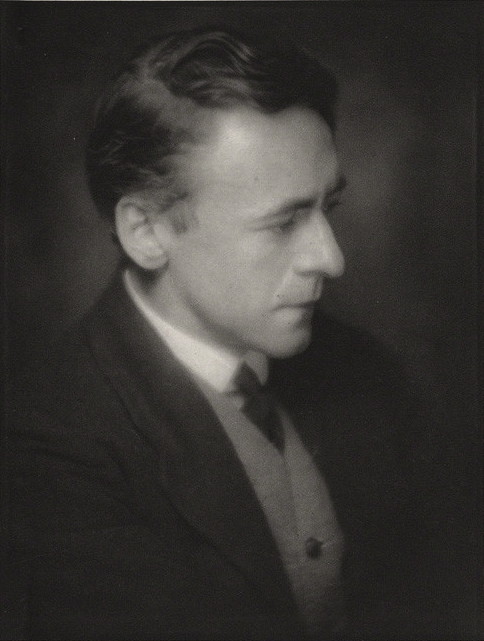
The Celtic symphonist who captured fog-swept coastlines and ancient legends in sound, Bax crafted some of the most romantically sumptuous orchestral music of the 20th century. A quintessential English composer who found his spiritual home in Ireland, he wrote tone poems and symphonies saturated with color, complexity, and bardic narrative. His music sounds like what would happen if Debussy met Yeats on the coast of Donegal.
0 concerts featuring works by this composer
No upcoming performances scheduled for works by Arnold Bax.
New to Arnold Bax? These works make great entry points.
A sun-drenched contrast to his usual Celtic mists, this orchestral work shows Bax could evoke any landscape with equal vividness.
Coronation March
A brilliant occasional piece that captures his gift for ceremonial writing and immediate appeal without his usual complexity.
Evocative tone poem that demonstrates his gift for atmospheric writing in a more concentrated, accessible form than the symphonies.
Add to Spotlight to be notified when a piece is scheduled near you.
The works that define Arnold Bax's legacy.
His most famous tone poem, evoking the Cornish coast and Arthurian legend with crashing waves of orchestral color—Bax's calling card.
His most successful symphony, balancing epic scope with lyrical beauty and Celtic atmosphere—the pinnacle of his symphonic achievement.
A shimmering tone poem depicting an Irish sea-god's realm, featuring some of his most sensuous orchestration and harmonic language.
Musical style, influences, and more
Bax's music features thick, chromatic harmonies, lush orchestration with multiple independent layers, and a gift for evoking landscape and mythology through instrumental color. His textures are dense yet luminous, his forms rhapsodic yet structurally coherent. The music feels improvisatory but reveals careful architecture—Wagner's influence filtered through Celtic mist.
Deeply influenced by Irish literature (particularly Yeats), Celtic mythology, and the Irish landscape despite being English. Studied at the Royal Academy with Frederick Corder. Wagner and Richard Strauss shaped his orchestral language, while Debussy influenced his harmonic palette. He emerged between late Romanticism and early modernism, choosing Romanticism.
Early works show Celtic twilight influence and tone poem orientation. Middle period produced seven symphonies of increasing complexity and ambition. Later works show some simplification and increased melancholy, partly reflecting war years and personal losses. Throughout, he maintained a consistent Romantic aesthetic against prevailing modernist trends.
Bax lived a kind of double life—publicly the respectable English composer (eventually knighted and made Master of the King's Music), privately a bohemian who spent years in Ireland under the pseudonym Dermot O'Byrne, writing poetry and immersing himself in Celtic culture. His Irish mistress inspired some of his most passionate music.
Bax was a phenomenal pianist with near-photographic memory who could play entire Wagner operas from memory at the piano. He often composed directly at the keyboard, improvising material that would become his orchestral scores—his piano music captures this spontaneous quality.
Experiencing a revival after decades of neglect. Chandos's complete recordings sparked renewed interest among conductors. Tintagel appears with increasing frequency; the symphonies less so due to their demands and length. Champion conductors like Vernon Handley established performing traditions. He's trending upward as audiences rediscover British Romanticism.
124 works in catalog
Browse the catalog below. Add any work to your Spotlight to track when it is performed live.
Showing 30 of 124 works