1
Violin Sonata in A Major: I. Allegretto ben moderato
The yearning opening melody is one of the most beautiful in all chamber music — irresistible from the first bar.
1822–1890
67 works · 2 upcoming works performed
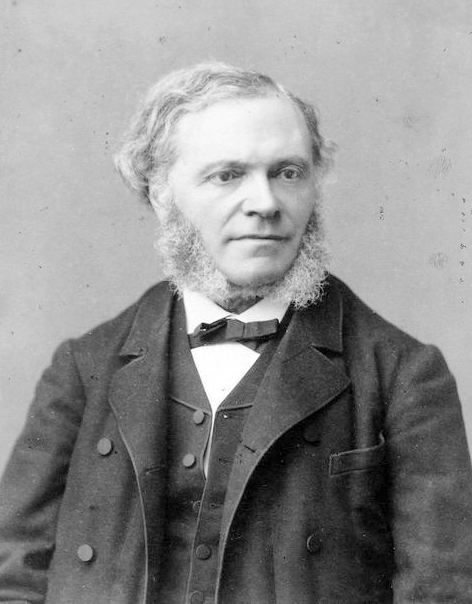
Franck was the quiet giant of French Romantic music — a Belgian-born organist whose deeply spiritual, harmonically rich music influenced an entire generation of French composers. He was modest and self-effacing, spending decades as a church organist before achieving recognition in his final years. His Symphony, Violin Sonata, and organ works are masterpieces of late-Romantic chromatic richness that seem to glow from within.
2 concerts featuring works by this composer
Never miss a Franck performance
Get notified when new concerts are announced near you
New to César Franck? These works make great entry points.
The yearning opening melody is one of the most beautiful in all chamber music — irresistible from the first bar.
Symphonic Variations for Piano and Orchestra
A brilliant, compact concertante work that's elegant, virtuosic, and more immediately accessible than the Symphony.
Panis angelicus (from Messe solennelle, Op. 12)
His most famous melody — a radiant hymn of serene beauty that needs no musical background to love.
Add to Spotlight to be notified when a piece is scheduled near you.
The works that define César Franck's legacy.
One of the greatest violin sonatas ever written — a work of surging Romantic passion and cyclic unity that was a wedding gift to Eugène Ysaÿe.
The quintessential French Romantic symphony — dark, passionate, and crowned by a triumphant cyclic finale that transforms the work's opening motif.
Trois Chorals for Organ
His final works and supreme organ masterpieces — three vast, meditation-like pieces that represent the summit of 19th-century organ composition.
Musical style, influences, and more
Franck's music is characterized by a richly chromatic harmonic language that constantly modulates through remote keys, creating a sense of endless harmonic motion. He pioneered 'cyclic form' — the technique of unifying multi-movement works by transforming a core theme across movements. His textures are organ-influenced: thick, layered, and resonant, with a warm, devotional quality even in secular works.
He studied at the Paris Conservatoire and worshipped Beethoven and Bach. As professor of organ at the Conservatoire, his students — d'Indy, Chausson, Duparc, Vierne, Tournemire — formed a 'Franck school' that dominated French music for decades. His relationship to the German Romantic tradition (especially Wagner and Liszt) distinguished him from the more purely French aesthetic of Fauré and Saint-Saëns.
His early career was dominated by his duties as organist at Sainte-Clotilde in Paris. His major works came remarkably late: the Piano Quintet (1879), the Symphonic Variations (1885), the Violin Sonata (1886), the Symphony (1888), and the String Quartet (1889) — all composed in his sixties. This extraordinary late flowering produced almost all the works for which he is remembered.
When Franck premiered his Symphony in D Minor in 1889, the Parisian musical establishment largely dismissed it — Gounod called it 'the assertion of incompetence pushed to dogmatic lengths.' Only Franck's devoted students recognized its greatness. He reportedly responded to their praise by saying simply, 'You see, the public is beginning to understand me.' He died the following year, never seeing the work become the masterpiece the world now recognizes.
Franck's organ improvisations at Sainte-Clotilde were legendary — Liszt, who attended one, declared Franck the equal of Bach as an organist. His published organ works (Six Pièces, Trois Pièces, Trois Chorals) are the foundation of the French symphonic organ tradition and among the greatest organ works of the 19th century.
The Violin Sonata is a recital staple, the Symphony appears regularly on orchestral programs, and the organ works are cornerstones of the repertoire. Panis angelicus is universally beloved. His Piano Quintet and Symphonic Variations are frequently performed. Franck is solidly in the standard repertoire — not trendy, but permanently essential. His orchestral tone poems (Le Chasseur maudit, Les Éolides) are underperformed.
67 works in catalog
Browse the catalog below. Add any work to your Spotlight to track when it is performed live.
Showing 30 of 67 works