1
The Unanswered Question
Just six minutes of mysterious, otherworldly beauty — it needs no background in modernism to cast its spell.
1874–1954
270 works
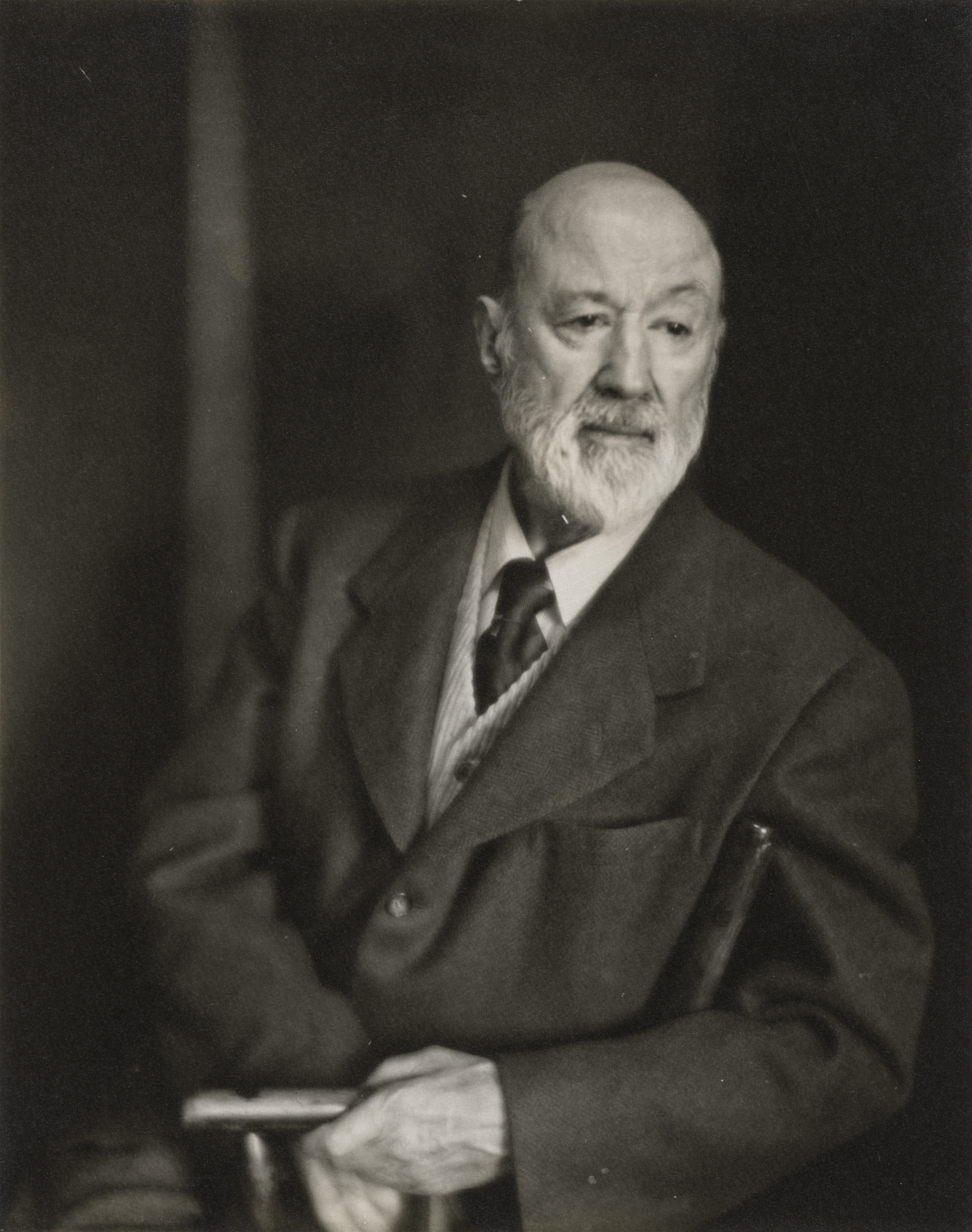
Ives was American music's great original — a visionary who anticipated nearly every major innovation of 20th-century music (polytonality, aleatoric music, quarter-tones, collage) while working full-time as an insurance executive. His music is a wild, magnificent collision of hymn tunes, marching bands, ragtime, and modernist experimentation that sounds like America itself. He composed in almost total obscurity, and his genius wasn't recognized until decades after most of his music was written.
0 concerts featuring works by this composer
No upcoming performances scheduled for works by Charles Ives.
New to Charles Ives? These works make great entry points.
Just six minutes of mysterious, otherworldly beauty — it needs no background in modernism to cast its spell.
His most immediately accessible orchestral work — built on hymn tunes with warmth and gentle nostalgia.
Two marching bands collide in a joyful, chaotic celebration — if you can smile through this, you'll love Ives.
Add to Spotlight to be notified when a piece is scheduled near you.
The works that define Charles Ives's legacy.
Piano Sonata No. 2 ('Concord, Mass., 1840–60')
A visionary, sprawling piano work portraying Emerson, Hawthorne, the Alcotts, and Thoreau — one of the most original piano works ever composed.
A triptych of American landscapes and memories that layers hymns, marches, and modernist harmony into something utterly unique.
A philosophical meditation in sound — a trumpet asks an eternal question against a backdrop of serene strings while woodwinds fail to answer. Profound and hauntingly beautiful.
Musical style, influences, and more
Ives's music deliberately layers multiple musical realities — two marching bands in different keys, a hymn dissolving into dissonance, a New England landscape overlaid with distant memories. His textures are often intentionally 'messy,' reflecting the lived experience of hearing multiple musics simultaneously in American life. Beneath the apparent chaos lies deeply felt emotion, often connected to his New England childhood, his father's experimental music-making, and the transcendentalist philosophy of Emerson and Thoreau.
His father George Ives was a Civil War bandmaster who experimented with polytonality and spatial music — Charles absorbed these ideas as a child. He studied with Horatio Parker at Yale but found academic music stifling. His philosophical heroes were Emerson and Thoreau. He anticipated the ideas of Cage, Cowell, and the entire American experimental tradition. Copland, Carter, and Bernstein later championed his music.
His most productive period was roughly 1906–1918, when he composed the Concord Sonata, the orchestral Sets, the Fourth Symphony, and most of his major works. A heart attack in 1918 slowed him dramatically, and he essentially stopped composing by the mid-1920s. Recognition came only in the 1940s and 50s — he won the Pulitzer Prize in 1947 for his Third Symphony, composed 36 years earlier. His late years were spent in seclusion.
Ives kept his composing entirely separate from his day job as a hugely successful insurance executive. He co-founded the agency Ives & Myrick, which became one of the largest in the country, while composing some of the most radical music in history on evenings and weekends. He reasoned that financial independence would free him from having to please audiences or critics — and he was right. He never compromised.
Ives pioneered the concept of performer choice and indeterminacy decades before John Cage. His Universe Symphony, left unfinished, called for multiple orchestras spread across valleys and mountaintops — a vision of music as landscape that was literally impossible to realize in his lifetime.
The Unanswered Question is a modern classic — one of the most frequently performed 20th-century American works. Three Places in New England and the symphonies appear regularly. The Concord Sonata is a major event when performed. His songs are increasingly championed. Ives's stature has grown steadily — he's now recognized as one of the towering figures of American music, and his works are genuinely evergreen.
270 works in catalog
Browse the catalog below. Add any work to your Spotlight to track when it is performed live.
Showing 30 of 270 works