1
Organ Symphony No. 5 in F Minor, Op. 42, No. 1: V. Toccata
You probably know it already — but hearing it live on a great organ is a completely different, physical experience.
1844–1937
39 works
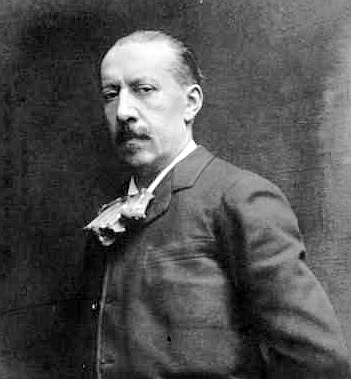
Widor was the king of the French organ — a composer and virtuoso who reigned over Saint-Sulpice in Paris for an extraordinary 64 years and whose organ symphonies redefined what the instrument could do. His Toccata from the Fifth Symphony is one of the most recognized pieces in all of organ music, a blazing showpiece that has launched a thousand weddings. But his ten organ symphonies are far more than that famous Toccata — they're vast, symphonic conceptions that treat the organ as a one-player orchestra.
0 concerts featuring works by this composer
No upcoming performances scheduled for works by Charles-Marie Widor.
New to Charles-Marie Widor? These works make great entry points.
You probably know it already — but hearing it live on a great organ is a completely different, physical experience.
Organ Symphony No. 5: I. Allegro vivace
The brilliant opening movement proves there's far more to this symphony than the famous Toccata — sparkling and inventive.
Organ Symphony No. 6: I. Allegro
A dramatic, powerful opening that immediately demonstrates why Widor's organ music is called 'symphonic' — orchestral in scope and ambition.
Add to Spotlight to be notified when a piece is scheduled near you.
The works that define Charles-Marie Widor's legacy.
The most famous organ piece in the world — a blazing, exhilarating toccata that is the quintessential organ showpiece.
Perhaps his finest complete symphony — a vast, dramatic work that showcases the full range of the French symphonic organ.
Symphonie gothique, Op. 70 (Organ Symphony No. 9)
A spiritual masterwork built on a Christmas plainchant — Widor's deepest and most architecturally ambitious organ symphony.
Musical style, influences, and more
Widor's organ music is characterized by orchestral thinking — his symphonies treat the organ's different stops and manuals as sections of an orchestra, creating music of genuine symphonic breadth and drama. His writing is technically demanding, harmonically rich in the French Romantic tradition, and architecturally grand. Beyond the organ, his orchestral and chamber works show a refined, Mendelssohnian craftsmanship.
He studied organ with Lemmens in Brussels, absorbing the tradition of the Cavaillé-Coll organ that would define his career. The great organ at Saint-Sulpice — one of the finest Cavaillé-Coll instruments — was his instrument for 64 years and essentially shaped his compositional voice. His students at the Paris Conservatoire included Vierne, Tournemire, Dupré, Schweitzer, Honegger, and Milhaud.
His first four organ symphonies (1870s) established the genre. Symphonies 5–8 represent his mature mastery. The final two — the Symphonie gothique and Symphonie romane — mark a spiritual deepening, incorporating plainchant themes. His later career focused increasingly on teaching and administrative roles at the Conservatoire, where his influence on the next generation was enormous.
Widor was appointed organist of Saint-Sulpice at age 24 as a 'temporary' appointment. He remained for 64 years, from 1870 to 1934 — one of the longest tenures in the history of any musical position. The magnificent Cavaillé-Coll organ at Saint-Sulpice wasn't just his instrument; it was essentially a co-composer, its colors and capabilities directly shaping the organ symphonies.
Widor wrote extensively outside the organ world — two piano concertos, a cello concerto, a symphony for orchestra, chamber music, and an opera. These works are virtually unknown but show a composer of genuine range whose reputation has been unfairly reduced to a single instrument.
The Fifth Symphony Toccata is ubiquitous — one of the most performed organ pieces worldwide, standard at weddings and festive services. The complete organ symphonies are organ recital staples, though performing an entire symphony is a major event. His non-organ music is almost never performed. Widor is evergreen in the organ world but essentially invisible outside it.
39 works in catalog
Browse the catalog below. Add any work to your Spotlight to track when it is performed live.
Showing 30 of 39 works