1
Piano Concerto in A Minor, Op. 16
Immediately appealing and representative, with a famous opening that hooks listeners instantly.
1843–1907
146 works · 6 upcoming works performed
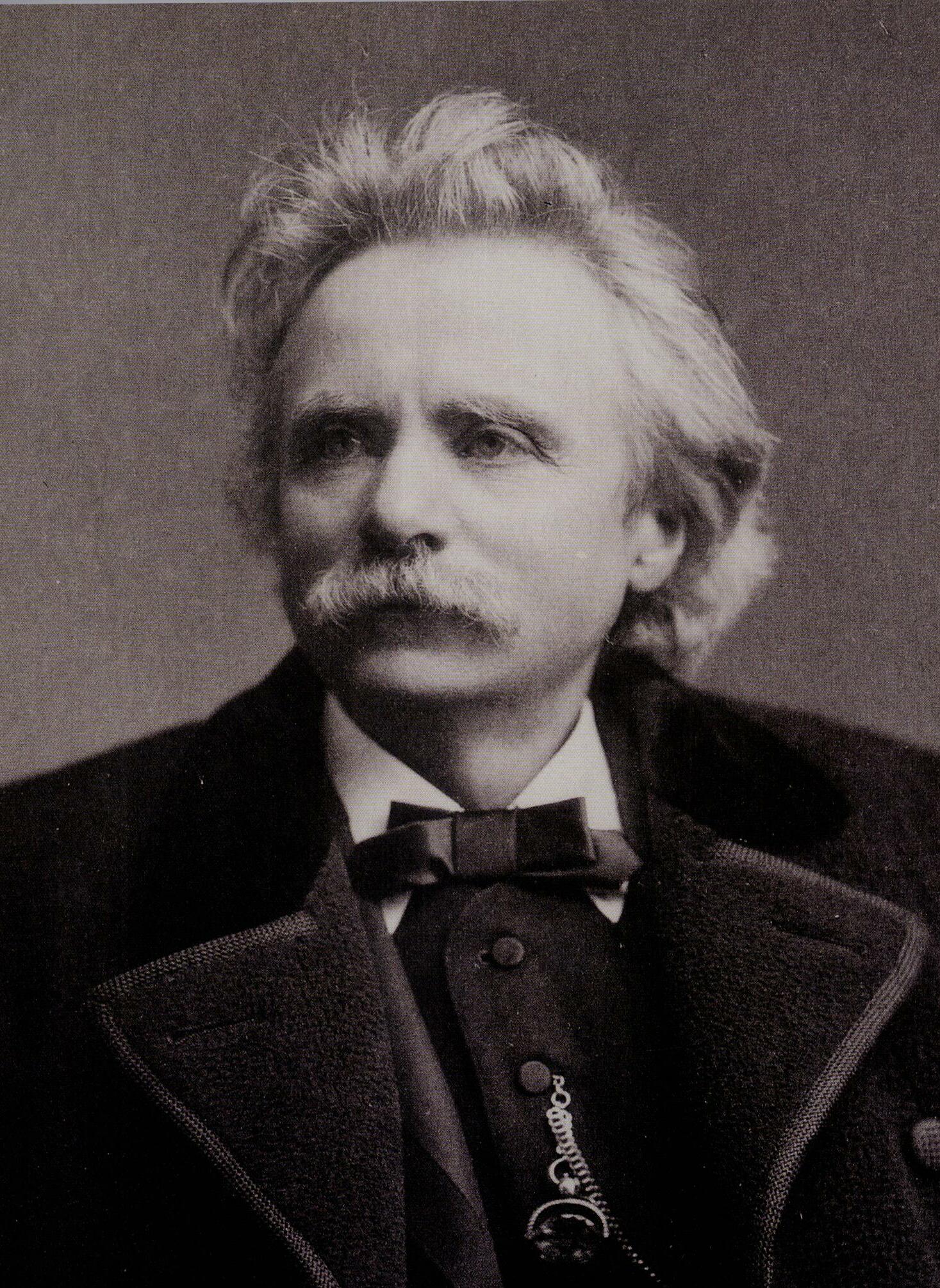
Grieg took Norwegian folk music and transformed it into concert works that conquered the world while never losing their mountain-air freshness. His harmonies sound simple until you realize how radical they are—parallel fifths, modal melodies, and open intervals that influenced everyone from Debussy to Delius. He proved a small nation's music could speak universally.
6 concerts featuring works by this composer


Never miss a Grieg performance
Get notified when new concerts are announced near you
New to Edvard Grieg? These works make great entry points.
Immediately appealing and representative, with a famous opening that hooks listeners instantly.
Elegant string writing that's accessible while showcasing his harmonic individuality.
Folk-inspired piano duets that capture his national spirit in bite-sized pieces.
Add to Spotlight to be notified when a piece is scheduled near you.
The works that define Edvard Grieg's legacy.
One of the most beloved concertos ever written, combining Norwegian folk spirit with Romantic virtuosity.
Peer Gynt Suites Nos. 1 and 2, Op. 46 and 55
Incidental music for Ibsen's play that's become a concert staple, including 'In the Hall of the Mountain King.'
Sixty-six piano miniatures spanning his career, distilling Norwegian spirit into perfect miniatures.
Musical style, influences, and more
Grieg's music is built on Norwegian folk idioms—Hardanger fiddle tunes, slåtter dance rhythms, and modal scales that avoid conventional major/minor. His harmonies favor open fifths, parallel motion, and chromatic inflections that create a shimmering, northern light quality. He excelled at miniatures, creating perfect three-minute worlds, though his larger works sometimes show the strain of expanding folk-based material to symphonic length.
Studied at Leipzig Conservatory, absorbing German Romanticism, but meeting Rikard Nordraak convinced him to embrace Norwegian nationalism. Liszt championed his music early on, while Grieg's harmonic innovations influenced French Impressionism. His commitment to folk music parallels Bartók's Hungarian explorations, though Grieg's approach was more Romantic and less ethnographic.
Early works show Leipzig training, but meeting Nordraak and discovering Norwegian folk music transformed his style by his mid-twenties. The Piano Concerto and Peer Gynt suites made him internationally famous in his thirties. His later years focused on miniatures—Lyric Pieces for piano and songs—where he achieved his most refined art. Ill health limited his output but intensified its concentration.
When Grieg met Liszt in Rome, the great pianist sight-read through Grieg's Violin Sonata at the piano, singing and playing all the parts while exclaiming 'This has real substance!' Liszt's enthusiasm helped launch Grieg's international career, though Grieg later expressed ambivalence about Liszt's flamboyant lifestyle.
Grieg was a brilliant pianist whose hands were too small for the virtuoso repertoire—he couldn't reach a ninth—so he wrote piano music that sounds virtuosic while avoiding impossible stretches. This practical limitation actually enhanced his style, forcing him toward crystalline textures rather than Lisztian octave passages.
Grieg's Piano Concerto is one of the most frequently performed concertos worldwide, and the 'Peer Gynt' suites appear regularly on orchestral programs. His piano miniatures are recital staples, while his songs deserve more attention than they receive. He's absolutely evergreen, though often dismissed as 'light' despite his harmonic sophistication.
146 works in catalog
Browse the catalog below. Add any work to your Spotlight to track when it is performed live.
Showing 30 of 146 works