
1
Pomp and Circumstance March No. 1
The famous 'Land of Hope and Glory' tune that's become synonymous with British ceremony.
1857–1934
166 works · 6 upcoming works performed
Elgar was the Edwardian gentleman who gave British music its backbone back after centuries of looking to the Continent. His music captures the grandeur and melancholy of empire at its twilight—nobility tinged with nostalgia. Self-taught and from humble origins, he created a distinctly English sound that's simultaneously imperial and intimate.
6 concerts featuring works by this composer


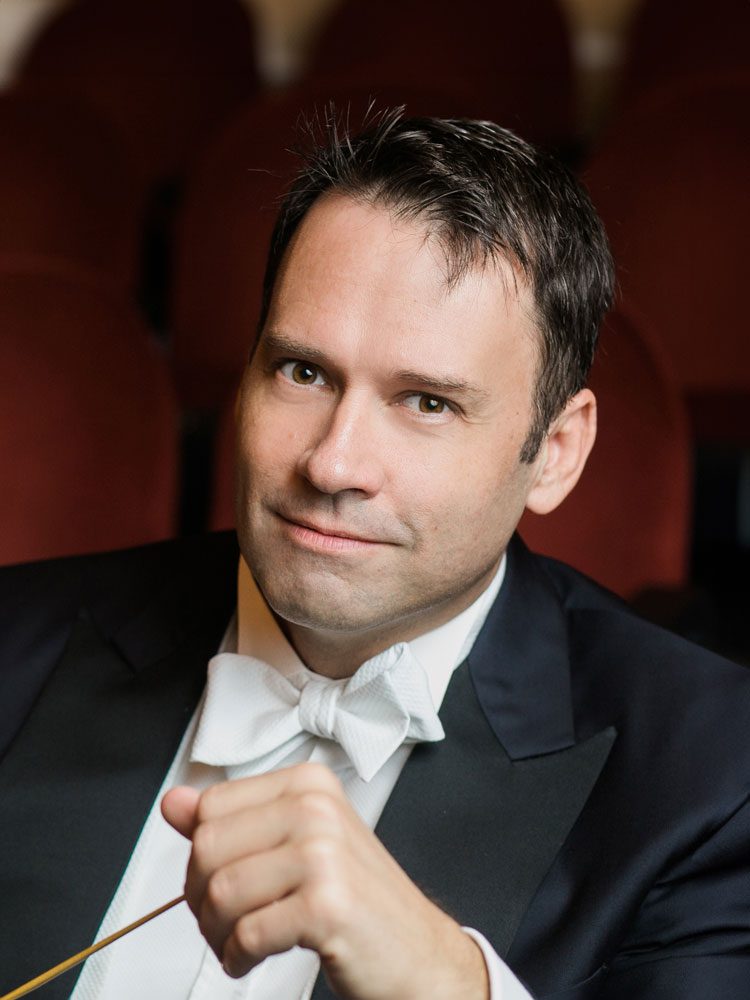
Never miss a Elgar performance
Get notified when new concerts are announced near you
New to Edward Elgar? These works make great entry points.
Pomp and Circumstance March No. 1
The famous 'Land of Hope and Glory' tune that's become synonymous with British ceremony.
Accessible yet sophisticated, with enough variety across fourteen movements to hook any listener.
A charming miniature that shows his melodic gift without the weight of his larger works.
Add to Spotlight to be notified when a piece is scheduled near you.
The works that define Edward Elgar's legacy.
Fourteen orchestral portraits that established him as a major composer and remain his most-performed work.
His elegiac masterpiece, written after WWI, capturing loss and nostalgia in the most personal of his concertos.
A monumental oratorio setting Cardinal Newman's poem about death and redemption, considered by many his greatest achievement.
Musical style, influences, and more
Elgar's orchestration is famously opulent—richly scored strings, noble brass, and a gift for long-breathed melody that unfolds with aristocratic ease. His harmonies are essentially Brahmsian but with an English tinge, favoring sequential patterns and chromatic inner voices. He had an uncanny ability to balance grandeur and intimacy, often within the same work, and his use of cyclic themes creates architectural unity across large spans.
Largely self-taught through score study, he absorbed Brahms, Wagner, and Dvořák while developing a distinctly English voice. His Catholic faith in Protestant England shaped his spiritual music. He revived the English choral tradition and influenced the next generation—Vaughan Williams, Walton, and Britten—though each moved in different directions.
Struggled in obscurity until his forties when the 'Enigma Variations' made him famous overnight. The Edwardian years brought masterpiece after masterpiece—the oratorios, symphonies, concertos. World War I devastated him spiritually; his late works are fewer and more shadowed. He essentially stopped composing after his wife's death in 1920, producing little in his final fourteen years.
The 'Enigma' of the 'Enigma Variations' has never been definitively solved—Elgar claimed a famous melody runs through the work but never plays, and despite a century of speculation, no one has proven what it is. He took the secret to his grave, turning a set of orchestral portraits into one of music's enduring mysteries.
Elgar was a serious amateur chemist who had a laboratory at home and conducted experiments—he even patented a device for synthesizing hydrogen sulfide. His scientific mind informed his systematic approach to composition, treating themes like chemical compounds that could be transformed and combined.
Elgar is frequently programmed in Britain and increasingly internationally, with the Cello Concerto and 'Enigma Variations' as staples. The oratorios are more occasional programming, often around religious holidays. Recent decades have seen increased appreciation of his symphonies and lesser-known works. He's evergreen in the UK, trending upward elsewhere.
166 works in catalog
Browse the catalog below. Add any work to your Spotlight to track when it is performed live.
Showing 30 of 166 works