1
Nocturne in E-flat Major, Op. 9, No. 2
Perhaps his most famous piece, it perfectly demonstrates his melodic gifts and improvisatory-sounding ornamentation in an accessible package.
1810–1849
113 works · 2 upcoming works performed
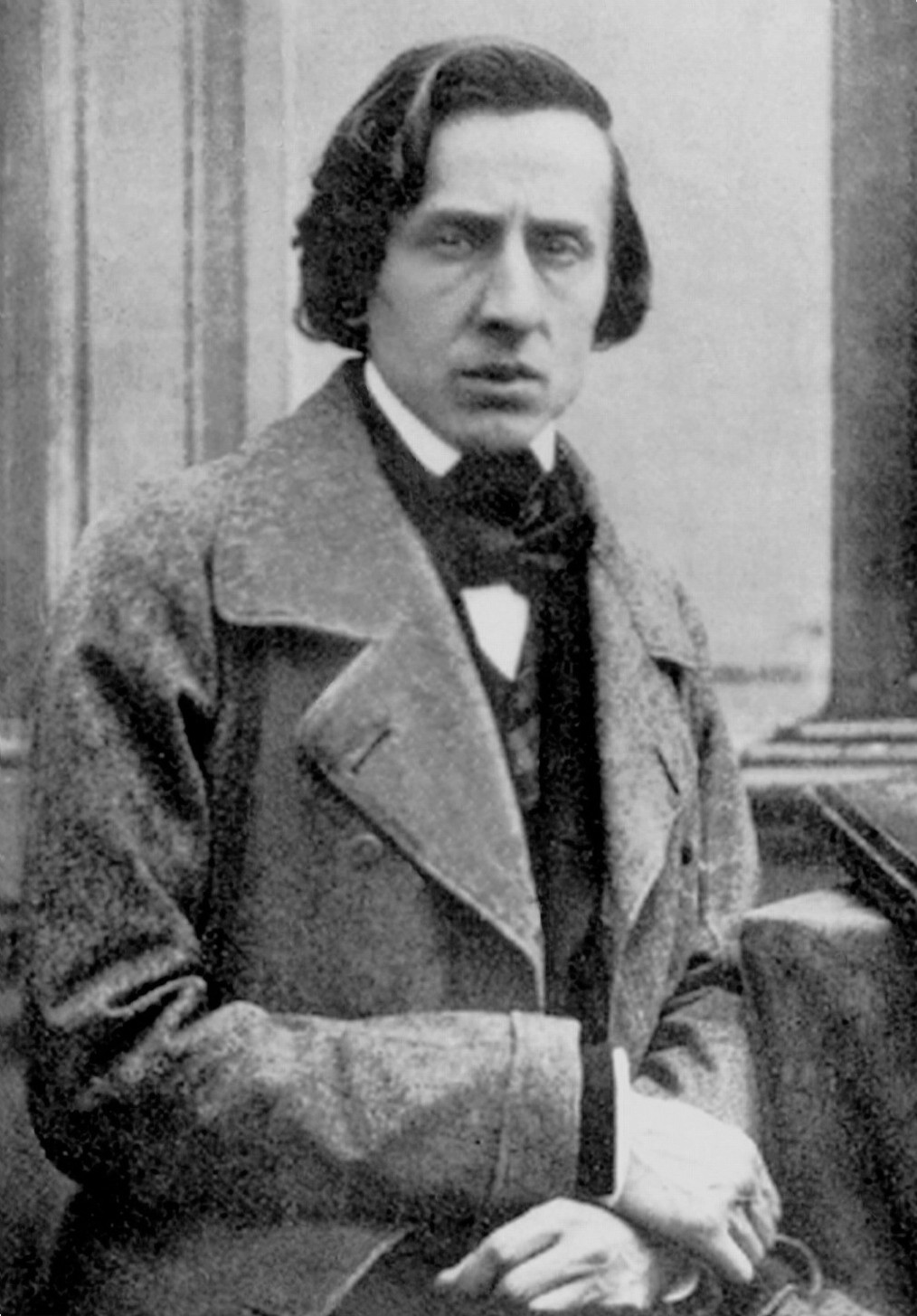
The poet of the piano, Chopin took the instrument to new expressive heights while almost exclusively composing for it. He transformed salon genres like nocturnes, mazurkas, and waltzes into profound artistic statements, creating a nationalist voice for Poland while living in Parisian exile. His music is simultaneously intimate and virtuosic, speaking directly to the soul through fingers on ivory.
2 concerts featuring works by this composer
Never miss a Chopin performance
Get notified when new concerts are announced near you
New to Frédéric Chopin? These works make great entry points.
Perhaps his most famous piece, it perfectly demonstrates his melodic gifts and improvisatory-sounding ornamentation in an accessible package.
Sparkling showpiece that's both virtuosic and charming, though it actually takes 1.5-2 minutes to play properly—the nickname oversimplifies but attracts listeners.
Published posthumously, it's Romantic piano writing at its most ardent and technically brilliant, immediately appealing to newcomers.
Add to Spotlight to be notified when a piece is scheduled near you.
The works that define Frédéric Chopin's legacy.
24 Preludes, Op. 28
A complete tour through all keys, from miniatures to substantial pieces, representing Chopin's harmonic and emotional range in perfectly distilled form.
The first of four ballades creates a narrative arc in abstract music, moving from pastoral calm to tempestuous drama—possibly inspired by Polish poet Mickiewicz.
Famous for its third movement march, the entire sonata is a dark masterpiece culminating in a bizarre, whispering finale that still sounds modern.
Musical style, influences, and more
Chopin's writing is idiomatically pianistic in ways no one before him achieved—exploiting pedal, wide-spanning textures, and the instrument's singing qualities. His harmonic language is richly chromatic and often surprising, with appoggiaturas and suspensions that ache with longing. He loved ornamental melodic lines that suggest bel canto opera, and his rhythmic language absorbed Polish folk dances (mazurka, polonaise) while remaining sophisticated and individual.
Field's nocturnes provided a model he transformed, while Bellini's operatic lyricism influenced his melodic style. Liszt was a friend and fellow virtuoso, though their approaches diverged. Schumann championed Chopin's music in print, recognizing genius in the early works. His Polish heritage infused his music with folk elements, creating a nationalist voice in abstract forms.
Early Warsaw years established his pianistic voice and introduced Polish elements. Settling in Paris (1831) brought him into elite artistic circles—Sand, Liszt, Delacroix—and his mature style crystallized through the 1830s. The relationship with George Sand (1838-47) was his most productive period. Final years brought deteriorating health but some of his most radical late works.
Chopin famously disliked public performance despite being a brilliant pianist, preferring intimate salon performances for small audiences. His largest concert, at the Salle Pleyel in 1848, accommodated only 300 people. This preference shaped his music—it's chamber music for the piano, meant for refined listening rather than grand gestures.
The mazurkas—56 of them—represent Chopin's most experimental and personal music, incorporating Polish folk modes and rhythms in increasingly abstract ways. They're less flashy than the ballades or etudes but arguably more innovative harmonically, pointing toward 20th-century developments.
Chopin is absolutely central to piano recitals—no pianist's repertoire is complete without substantial Chopin. The etudes, ballades, and scherzos are staples, while the nocturnes and preludes offer endless recital options. Surprisingly, his concertos appear less frequently than you'd expect, partly because the orchestration is considered weak. He's both audience-friendly and respected by connoisseurs, the rare composer who satisfies everyone.
113 works in catalog
Browse the catalog below. Add any work to your Spotlight to track when it is performed live.
Showing 30 of 113 works