1
Natures mortes (Still Lifes) for piano
Explores overtone series and spectral harmony on a single, normally-tuned piano—accessible entry to his sound world.
b. 1953
1 work
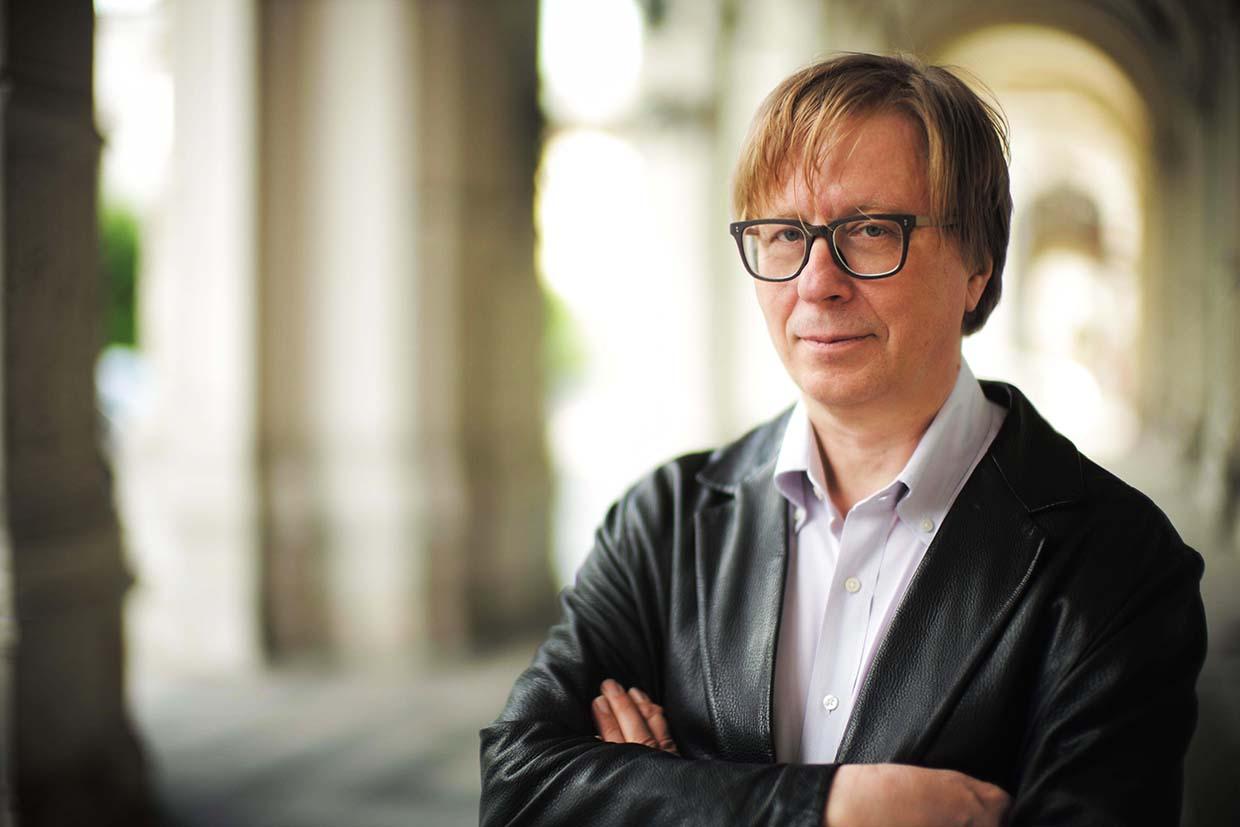
Haas composes with microtones and spectral harmony, creating soundworlds that shimmer between tuning systems. His music often unfolds in total darkness, removing visual distractions to focus purely on sonic experience. He's made the space between pitches as expressive as the pitches themselves, proving that extended techniques can serve profound beauty rather than mere novelty.
0 concerts featuring works by this composer
No upcoming performances scheduled for works by Georg Friedrich Haas.
New to Georg Friedrich Haas? These works make great entry points.
Natures mortes (Still Lifes) for piano
Explores overtone series and spectral harmony on a single, normally-tuned piano—accessible entry to his sound world.
String Quartet No. 1
Uses standard tuning while introducing spectral techniques and sustained textures characteristic of later works.
Hyperion
Orchestral work demonstrating his large-scale thinking with more traditional instrumentation than his microtonal pieces.
Add to Spotlight to be notified when a piece is scheduled near you.
The works that define Georg Friedrich Haas's legacy.
in vain for 24 musicians
A 70-minute journey through microtonal space performed in total darkness, creating one of contemporary music's most immersive experiences.
Explores all possible tunings between equal temperament and pure just intonation, a sonic tour de force of harmonic color.
limited approximations for six microtonally tuned pianos and orchestra
Realizes microtonal harmonies through multiple pianos tuned in different systems, creating shimmering orchestral textures.
Musical style, influences, and more
Haas works with microtones (intervals smaller than semitones) and spectral techniques derived from acoustic phenomena, creating harmonies that shimmer and beat with natural overtones. His slow-moving textures allow ears to adjust to alternative tuning systems, often building to ecstatic climaxes. The music frequently explores extreme registers and sustained tones that seem to vibrate in air.
Ligeti was his teacher and model for textural thinking. The spectral school (Grisey, Murail) influenced his harmonic language. La Monte Young's just intonation experiments provided microtonal precedents. Feldman's slow time and meditative focus shaped his temporal approach.
Haas developed his microtonal language gradually through the 1990s and 2000s, gaining international attention with string quartets and ensemble works. His orchestral and operatic works of the 2010s brought him to major institutions. He continues evolving his harmonic language while maintaining commitment to alternative tuning systems.
Haas's in vain for 24 musicians is performed in complete darkness—audiences sit in blackness while microtonal harmonies evolve, removing visual distraction and forcing pure listening. The effect is reportedly transcendent, though polarizing for those uncomfortable in total darkness.
Haas composes using up to 72 pitches per octave (compared to the standard 12), requiring special instruments or tuning adjustments—yet the music often sounds more euphonious than much standard-tuning contemporary music.
Increasingly programmed by adventurous new music ensembles and festivals. The practical challenges (retuning instruments, total darkness performances) limit widespread adoption, but institutions committed to contemporary music regularly feature his works. Growing presence in academia and specialist circles.
1 works in catalog
Browse the catalog below. Add any work to your Spotlight to track when it is performed live.
Showing 1 of 1 works