1
Battalia à 10
Under ten minutes of vivid musical storytelling — drunken soldiers, clashing armies, and a lament for the dead — that sounds startlingly modern for 1673.
1644–1704
60 works
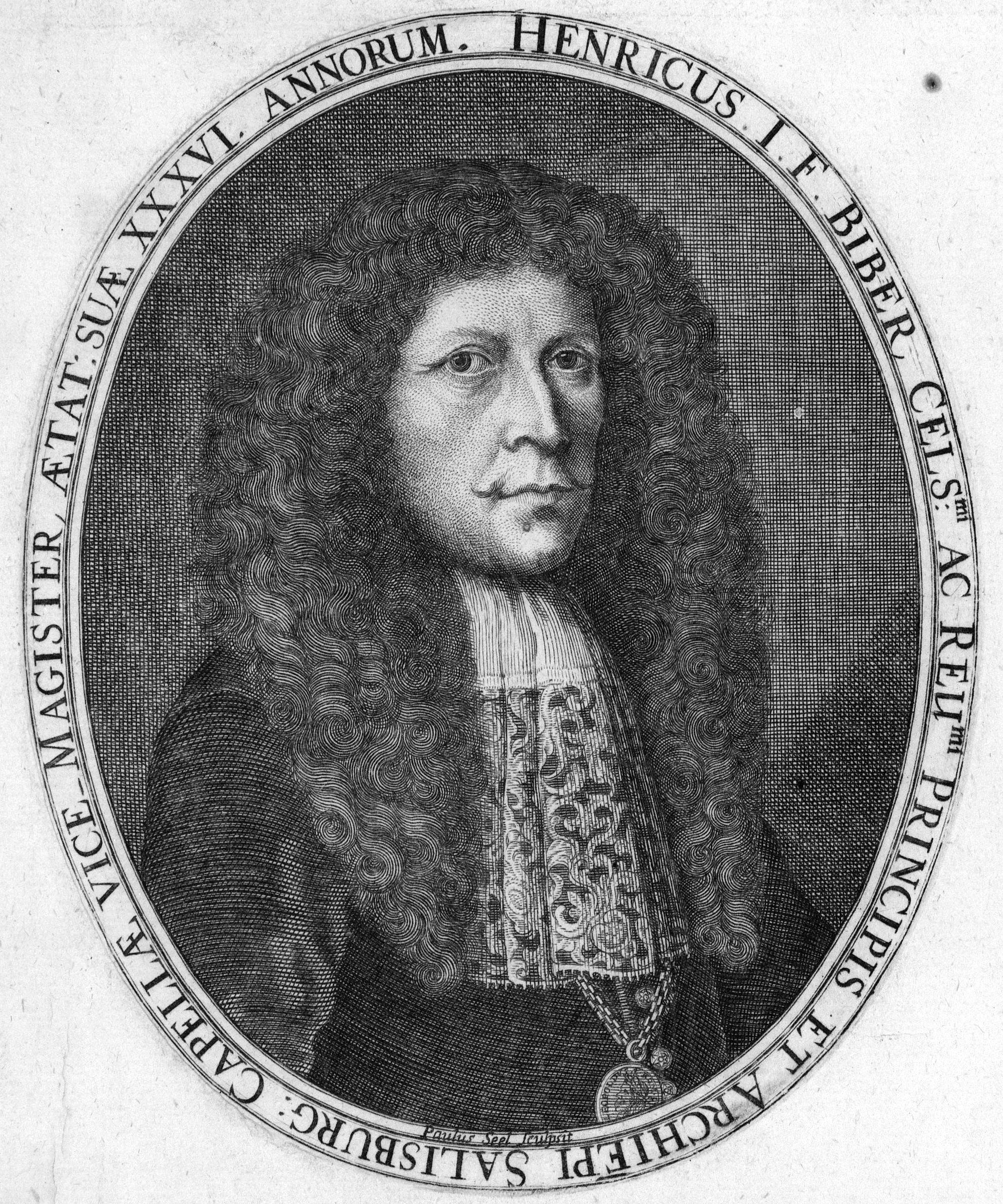
See entry for Heinrich Ignaz Franz von Biber — these names refer to the same composer, the great Baroque violin virtuoso of Salzburg. The 'Franz' is sometimes included or omitted in different sources, but there is only one Biber who transformed violin technique and created some of the most visionary music of the 17th century.
0 concerts featuring works by this composer
No upcoming performances scheduled for works by Heinrich Franz von Biber.
New to Heinrich Franz von Biber? These works make great entry points.
Battalia à 10
Under ten minutes of vivid musical storytelling — drunken soldiers, clashing armies, and a lament for the dead — that sounds startlingly modern for 1673.
Mystery Sonata No. 1 in D Minor, 'The Annunciation'
The opening sonata of the Mystery cycle is immediately beautiful and accessible, with a singing melody over a gentle ground bass.
The standalone epilogue to the Mystery Sonatas — a magnificent unaccompanied violin work that anticipates Bach's Chaconne by decades.
Add to Spotlight to be notified when a piece is scheduled near you.
The works that define Heinrich Franz von Biber's legacy.
Mystery (Rosary) Sonatas for Violin and Continuo
Fifteen sonatas depicting the mysteries of the Rosary, each using a different scordatura tuning — one of the most ambitious and visionary cycles in all Baroque music.
A colossal 53-part polychoral mass for multiple choirs, soloists, and instrumentalists that fills Salzburg Cathedral with overwhelming sonic splendor.
Battalia à 10
A wildly theatrical battle piece that uses col legno, polytonality, and intentional cacophony centuries before the avant-garde made them fashionable.
Musical style, influences, and more
Biber's music is defined by his extraordinary use of scordatura (retuning the violin's strings) to unlock colors and sonorities impossible in standard tuning, combined with a theatrical, almost cinematic sense of musical storytelling. His harmonic language is adventurous for its time, full of expressive dissonances and dramatic contrasts between sections.
Biber was trained in the Central European tradition and served at the Salzburg court of the Archbishop. He was influenced by the Italian violin school and the German polyphonic tradition, and his sacred music shows the influence of the grand Venetian polychoral style. His virtuosity set the standard that would influence violin writing for generations.
Biber's early career was spent at the court of Kremsier (now Kroměříž) before his move to Salzburg, where he spent the rest of his life. His greatest works — the Mystery Sonatas, the Battalia, and large-scale sacred works — date from his mature Salzburg years. He was eventually ennobled by the Emperor, a rare honor for a musician, becoming 'von Biber' in recognition of his achievements.
Biber apparently absconded from his position at the Kremsier court without permission to take up a more prestigious post in Salzburg — essentially deserting his employer, which in the feudal system of the time was a serious offense. Fortunately, his extraordinary talents made him indispensable, and he eventually rose to become one of the most honored musicians in Europe.
His Battalia à 10 (1673) is an astonishingly avant-garde work that uses col legno, polytonality, and dissonant cluster effects to depict a military scene — techniques that wouldn't become common for another 250 years.
The period-instrument revival has brought Biber from obscurity to regular programming by Baroque ensembles and specialist violinists. The Mystery Sonatas are a pinnacle of the Baroque violin repertoire and are increasingly recorded and performed. Mainstream orchestral programming remains rare, but the Battalia is a crowd-pleasing concert opener that deserves wider exposure.
60 works in catalog
Browse the catalog below. Add any work to your Spotlight to track when it is performed live.
Showing 30 of 60 works