1
Bachianas Brasileiras No. 5
That soprano melody over cello choir is one of classical music's most immediately captivating sounds — start here and you'll want more.
1887–1959
182 works
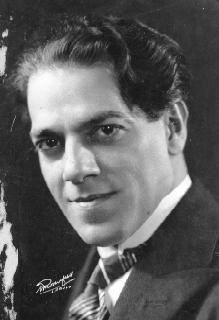
Heitor Villa-Lobos was Brazil's musical force of nature — a composer of staggering prolificacy who channeled the rhythms of Rio de Janeiro, the sounds of the Amazon, and the spirit of Bach into a wildly exuberant body of work. He's the rare composer who can make you feel the heat and color of an entire country. Nobody else sounds like him, and any exploration of 20th-century music that skips Villa-Lobos is badly incomplete.
0 concerts featuring works by this composer
No upcoming performances scheduled for works by Heitor Villa-Lobos.
New to Heitor Villa-Lobos? These works make great entry points.
That soprano melody over cello choir is one of classical music's most immediately captivating sounds — start here and you'll want more.
The famous 'Little Train of the Caipira' finale is a delightful orchestral train ride that captures Villa-Lobos's irresistible rhythmic energy.
Prelude No. 1 in E Minor for Guitar
One of the most beloved pieces in the guitar repertoire — lyrical, nostalgic, and instantly memorable.
Add to Spotlight to be notified when a piece is scheduled near you.
The works that define Heitor Villa-Lobos's legacy.
The aria for soprano and eight cellos is one of the most hauntingly beautiful melodies of the 20th century — a perfect fusion of Bach and Brazil.
Chôros No. 10 for Chorus and Orchestra, 'Rasga o Coração'
A massive choral-orchestral evocation of Brazilian musical life — wild, ecstatic, and overwhelming in its rhythmic and textural abundance.
A warmly lyrical concerto that has become the cornerstone of the modern guitar concerto repertoire.
Musical style, influences, and more
Villa-Lobos's music is a glorious collision of Brazilian popular and folk music — choro, samba, street-band sounds, indigenous melodies — with European classical forms, especially the music of Bach. His textures are rich, sometimes deliberately overloaded, with a rhythmic vitality that's infectious and an orchestral palette of tropical color. His formal approach is improvisatory and organic rather than architecturally strict, giving his music a quality of spontaneous overflowing creativity.
Villa-Lobos claimed the Amazon rainforest and the streets of Rio as his greatest teachers, absorbing choro, samba, and folk traditions during his youthful wanderings. Bach was his other great love — the Bachianas Brasileiras series explicitly fuses Bachian counterpoint with Brazilian melody. Brief contact with Milhaud, Varèse, and the Parisian avant-garde broadened his palette, but his voice remained utterly Brazilian.
Villa-Lobos's early career was spent absorbing Brazilian folk and popular music through extensive travels. His modernist period in the 1920s produced radical works like the Chôros series. The Bachianas Brasileiras of the 1930s-40s represent his synthesis of Brazilian and Bachian elements, and this period also saw his massive involvement in Brazilian music education under the Vargas government. His later years brought a more conservative international style in works for major US and European commissions.
Villa-Lobos famously claimed to have been captured by cannibals during his travels through the Brazilian interior. While almost certainly apocryphal, the story perfectly captures his self-mythologizing personality and his genuine immersion in the diverse musical cultures of Brazil. He was his own best publicist, and the legend served his music well.
Villa-Lobos was a central figure in Brazilian music education, creating a massive national choral singing program that at its peak involved 40,000 voices in stadium events. His educational legacy in Brazil may ultimately be as significant as his compositions.
The Bachianas Brasileiras No. 5 is a perennial concert favorite, and the guitar works are cornerstones of the instrument's repertoire. The symphonies and many orchestral works remain underperformed outside Brazil, representing a huge untapped resource for adventurous programmers. Villa-Lobos is overdue for the kind of comprehensive reassessment that Janáček and Sibelius have received.
182 works in catalog
Browse the catalog below. Add any work to your Spotlight to track when it is performed live.
Showing 30 of 182 works