1
Tout un monde lointain... for Cello and Orchestra
Ravishing orchestral colors, a singing cello part, and Baudelaire's poetry as inspiration — this is the work that hooks most newcomers on Dutilleux.
1916–2013
30 works
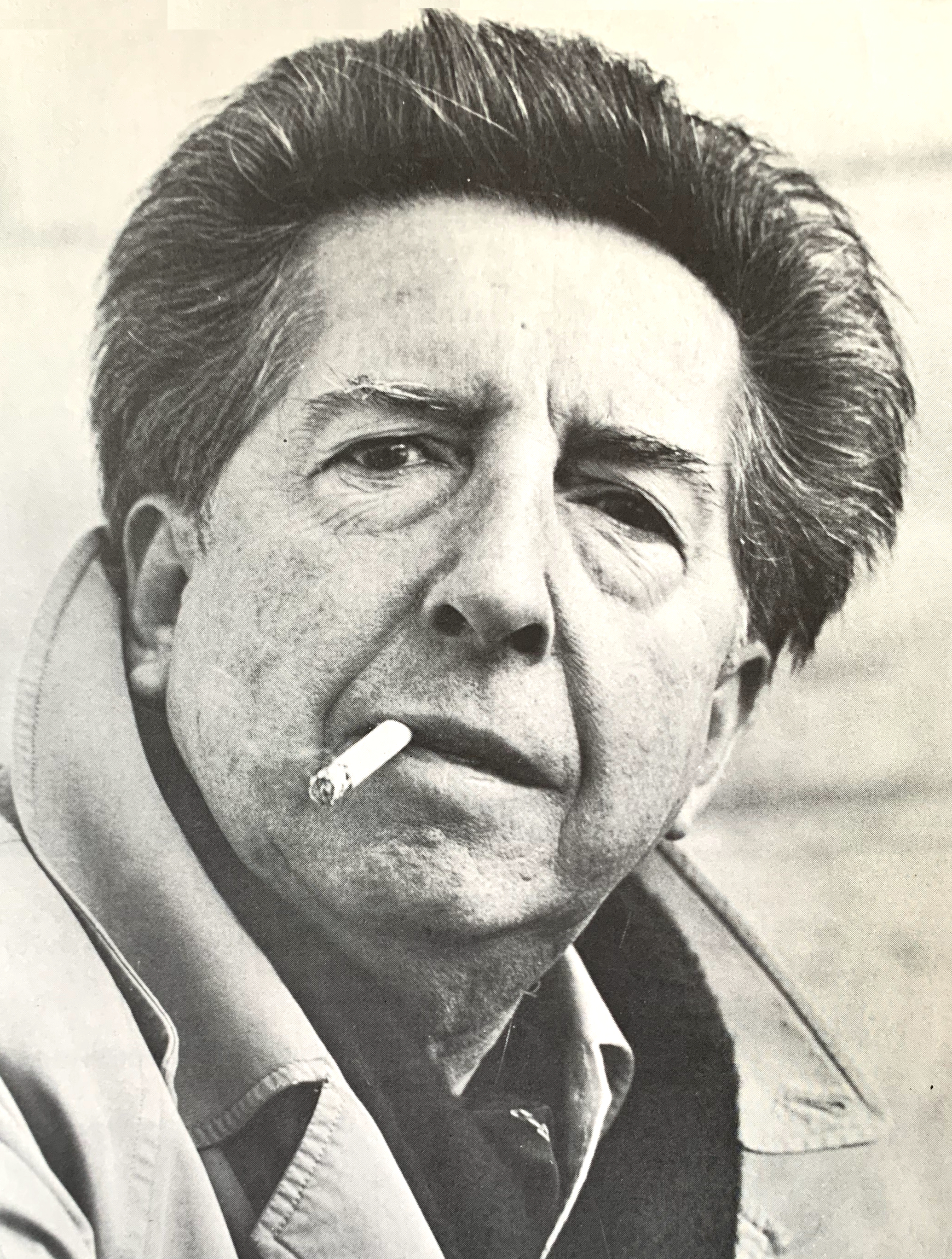
Henri Dutilleux was French music's great perfectionist — a composer who published only a handful of works but made each one a polished gem of color, mystery, and refined beauty. Working quietly in Paris while trends swirled around him, he created an orchestral language of shimmering ambiguity and poetic depth that places him among the finest French composers of the 20th century. If you love Debussy and Ravel but want to go deeper, Dutilleux is your next discovery.
0 concerts featuring works by this composer
No upcoming performances scheduled for works by Henri Dutilleux.
New to Henri Dutilleux? These works make great entry points.
Tout un monde lointain... for Cello and Orchestra
Ravishing orchestral colors, a singing cello part, and Baudelaire's poetry as inspiration — this is the work that hooks most newcomers on Dutilleux.
Colorful, virtuosic, and structurally satisfying — a fifteen-minute orchestral journey that shows what French orchestral mastery sounds like in the modern era.
The most accessible entry to Dutilleux's symphonic thinking — Romantic warmth and driving energy wrapped in shimmering French orchestral color.
Add to Spotlight to be notified when a piece is scheduled near you.
The works that define Henri Dutilleux's legacy.
Tout un monde lointain... (A Whole Distant World) for Cello and Orchestra
Dutilleux's cello concerto, inspired by Baudelaire, is one of the most beautiful concertos of the 20th century — luminous, mysterious, and deeply poetic.
A symphony that places a small ensemble within the full orchestra, creating a shimmering dialogue of near and far that captures Dutilleux's love of musical perspective.
A dazzling orchestral showpiece in which five movements each 'metabolize' into the next — Dutilleux's most brilliant demonstration of progressive transformation.
Musical style, influences, and more
Dutilleux's music unfolds organically through what he called 'progressive growth' — themes emerging gradually from fragments, evolving across a work rather than being stated and developed in the classical sense. His orchestration is luminous and iridescent, rooted in the French tradition of Debussy and Ravel but with a more modernist harmonic complexity. His textures have a fluid, dreamlike quality — colors bloom, dissolve, and transform with extraordinary subtlety.
Dutilleux inherited the French orchestral tradition of Debussy, Ravel, and Roussel, and admired Bartók's structural rigor. He was close to many visual artists — Proust, Van Gogh, and the Impressionists informed his aesthetic — and maintained a cordial distance from both the serialist avant-garde and the neo-Romantic reaction. His friendship with Mstislav Rostropovich and Isaac Stern resulted in major works for cello and violin.
Dutilleux's early works show a post-Romantic warmth that gradually evolved toward greater harmonic complexity and formal innovation. His two symphonies (1951, 1959) established his mature voice. The 1970s brought Tout un monde lointain for cello and the orchestral Timbres, Espace, Mouvement. His late masterpieces — The Shadows of Time and Correspondances — show an ever-more refined and luminous orchestral language, composed well into his nineties.
Dutilleux was so self-critical that he withdrew his first two published works — a piano sonata and a flute sonatine — from his official catalog, and reportedly destroyed several completed compositions. He published barely a dozen major works in a career spanning seven decades, but each one is a masterpiece. When asked why he composed so little, he reportedly said he simply couldn't publish anything that wasn't exactly right.
Dutilleux spent decades working at the French Radio as head of music production, and this practical immersion in sound recording and broadcast technology gave him an unusually precise understanding of how orchestral timbres are perceived — an understanding that contributes to the almost three-dimensional quality of his orchestration.
Dutilleux is increasingly central to the orchestral repertoire — Métaboles and Tout un monde lointain are regularly programmed by major orchestras worldwide. His small catalog means audiences can encounter his complete orchestral output relatively quickly. French orchestras champion him especially, but conductors like Esa-Pekka Salonen and Ludovic Morlot have brought him to American audiences. He's trending upward as orchestras seek sophisticated post-war repertoire that audiences actually enjoy.
30 works in catalog
Browse the catalog below. Add any work to your Spotlight to track when it is performed live.
Showing 30 of 30 works