1
Symphony No. 3, Op. 36, 'Symphony of Sorrowful Songs'
The work that introduced millions to Górecki — its slow-building emotional power requires only patience and an open heart.
1933–2010
28 works
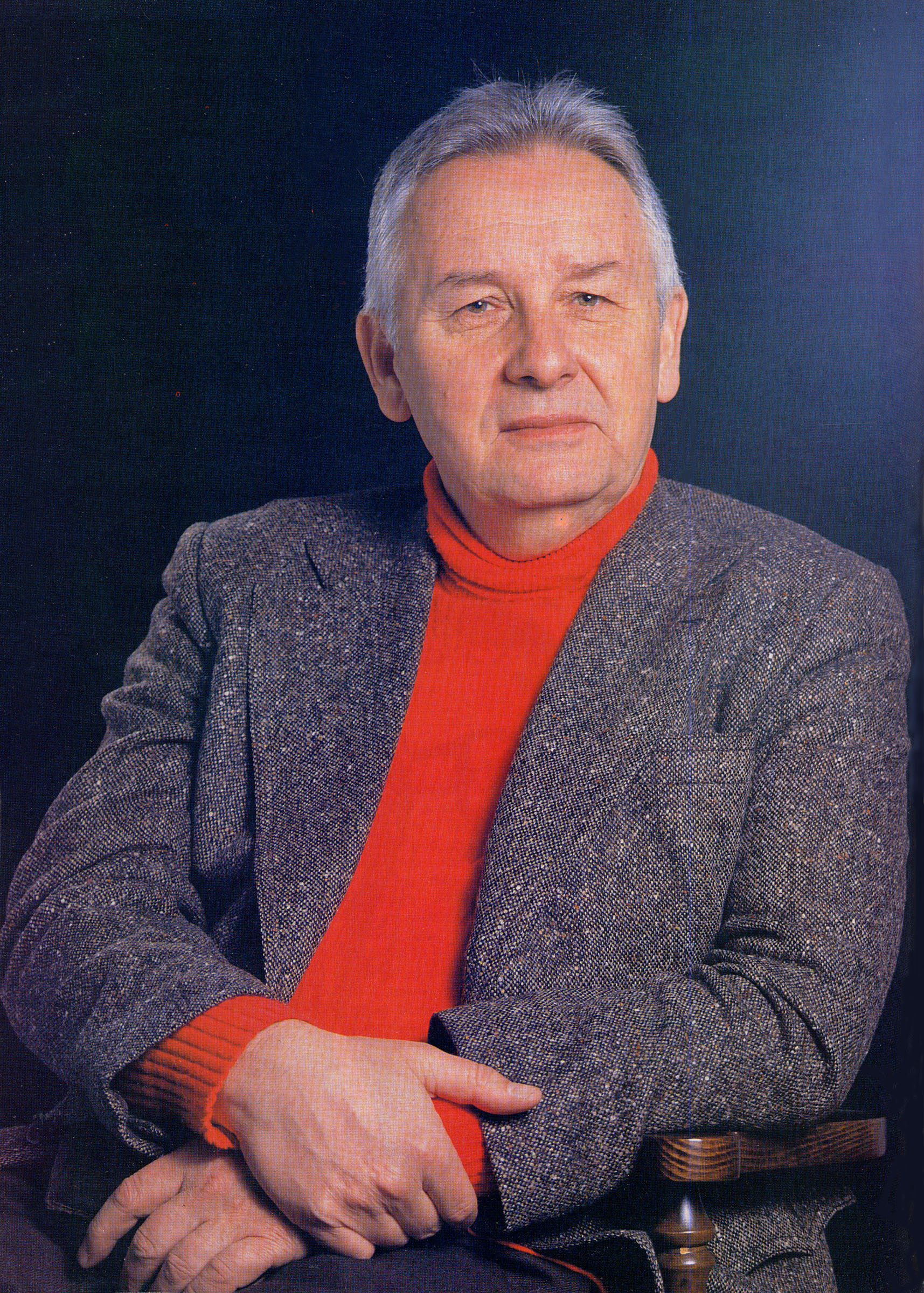
Henryk Górecki went from being a radical Polish avant-gardist to an unlikely worldwide phenomenon when his Symphony No. 3 became a million-selling recording in 1992, touching listeners who had never heard of him with its luminous, grieving beauty. Behind that single famous work lies a far more complex and rewarding composer — someone who moved from aggressive modernism to a deeply spiritual music of elemental simplicity and emotional power.
0 concerts featuring works by this composer
No upcoming performances scheduled for works by Henryk Górecki.
New to Henryk Górecki? These works make great entry points.
The work that introduced millions to Górecki — its slow-building emotional power requires only patience and an open heart.
A brief, radiant choral work written for Pope John Paul II's visit to Poland — immediately beautiful and a perfect miniature introduction.
Three Pieces in Old Style
Early orchestral works of haunting simplicity that bridge Górecki's modernist roots and his later spiritual style — accessible and evocative.
Add to Spotlight to be notified when a piece is scheduled near you.
The works that define Henryk Górecki's legacy.
Three movements of sustained lamentation — a mother's prayers, a girl's wall inscription at Auschwitz, a folk song of loss — that became one of the most emotionally overwhelming works of the 20th century.
A monumental a cappella choral work written in response to the 1981 police beating of protesting workers — forty minutes of slowly building spiritual intensity.
String Quartet No. 3, Op. 67, '...songs are sung'
A late masterpiece that combines Górecki's folk-inflected lyricism with a restless, searching harmonic language — the Third Symphony's depth in chamber form.
Musical style, influences, and more
Górecki's mature style is characterized by radical simplicity — slow-moving harmonies, repetitive patterns, modal melodies, and a gravitational pull toward minor-key contemplation that can feel almost liturgical. His earlier avant-garde works are sharply contrasting — harsh, dissonant, and percussive. The common thread is an instinct for monumental gesture and an ability to generate overwhelming emotional weight from minimal materials.
Górecki's early music was shaped by the Polish avant-garde and Darmstadt circles, with Webern a key influence. His turn toward spiritual simplicity in the 1970s paralleled similar moves by Pärt and Tavener, though Górecki's voice remained distinctly Polish — rooted in Catholic devotion, Polish folk music, and the Tatra mountain region where he grew up. The horrors of Auschwitz, near his birthplace, haunt his Symphony No. 3.
Górecki's early works of the 1960s were aggressively modernist — Scontri and the First Symphony established him as a leading Polish avant-gardist. The 1970s brought a decisive turn toward simplicity with the Symphony No. 3 (1976) and sacred works. His later decades deepened this contemplative language in works like the Miserere and his string quartets, while his reputation fluctuated between massive popular success and critical skepticism.
The 1992 Nonesuch recording of his Third Symphony with Dawn Upshaw and the London Sinfonietta sold over a million copies — an almost unprecedented commercial success for a contemporary classical work. Górecki himself was bewildered by the attention and somewhat ambivalent about being defined by a single piece. He reportedly said he wasn't interested in fame and refused to travel to promote the recording.
Górecki's string quartets, especially the late ones (Already It Is Dusk and Quasi una Fantasia), reveal a far more complex and searching composer than the Third Symphony alone might suggest — they're tough, dissonant, emotionally raw works that challenge the easy 'spiritual minimalist' label.
The Third Symphony remains a powerful concert draw — audiences respond viscerally to it, and it pairs well with other contemplative repertoire. Beyond that single work, Górecki is underperformed in concert settings. The choral works deserve wider exposure, and the string quartets are increasingly championed by adventurous ensembles. Programming Górecki beyond the Third Symphony is an opportunity waiting to be seized.
28 works in catalog
Browse the catalog below. Add any work to your Spotlight to track when it is performed live.
Showing 28 of 28 works