1
Mörike-Lieder: 'Er ist's' (Spring)
A brief, joyous burst of springtime energy that shows how Wolf can capture a mood in a single, perfectly formed minute.
1860–1903
80 works
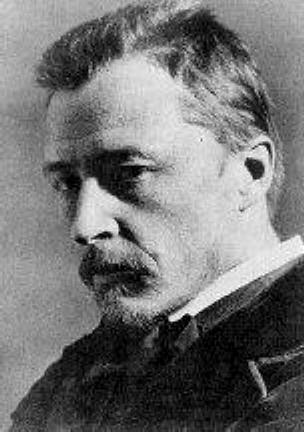
Hugo Wolf was the German art song's most intense and obsessive master — a composer who poured his entire volatile genius into the Lied, creating songs of such psychological depth and literary sophistication that they stand alongside Schubert's and Schumann's as the summit of the genre. Tortured by mental illness that ended his career at 37 and his life at 42, he compressed an extraordinary legacy into barely a decade of feverish creative activity.
0 concerts featuring works by this composer
No upcoming performances scheduled for works by Hugo Wolf.
New to Hugo Wolf? These works make great entry points.
Mörike-Lieder: 'Er ist's' (Spring)
A brief, joyous burst of springtime energy that shows how Wolf can capture a mood in a single, perfectly formed minute.
A tiny, exquisite song about how small things can be precious — delicate, warm, and the ideal introduction to Wolf's miniature art.
A passionate setting of Mignon's famous song that demonstrates Wolf's Wagnerian ambition applied to the intimate Lied.
Add to Spotlight to be notified when a piece is scheduled near you.
The works that define Hugo Wolf's legacy.
Mörike-Lieder (53 Songs)
The greatest song collection of the post-Schumann era — 53 songs of astonishing variety and psychological depth, from comedy to tragedy to mystical vision.
Sacred and secular Spanish poetry set with burning intensity — the sacred songs in particular achieve a devotional ecstasy unmatched in the Lied.
Miniature dramas of Italian love and jealousy — Wolf's most concentrated and perfect songs, many lasting barely a minute but containing worlds of emotion.
Musical style, influences, and more
Wolf's songs are characterized by an extraordinarily close marriage of text and music — every word, every shade of meaning receives its perfect musical equivalent. His piano parts are equal partners with the voice, often carrying the emotional weight through complex, Wagnerian harmonic progressions. His declamation follows the natural rhythms of speech with an almost obsessive precision, and his harmonic language pushes late-Romantic chromaticism to its most expressive extremes.
Wagner was Wolf's god — he worshipped Tristan und Isolde and absorbed its chromatic harmonic language into the intimate world of the Lied. He was fiercely opposed to Brahms (whom he attacked as a music critic) and allied himself with the 'New German School.' His literary taste was exceptionally refined — Mörike, Goethe, and the Spanish and Italian poetry he set shaped his musical language as much as any composer did.
Wolf's early career as a fiery music critic gave way to an explosive creative period from 1888 to 1897, during which he produced virtually all of his mature songs in concentrated bursts — the Mörike, Eichendorff, Goethe, Spanish, and Italian Songbooks. He attempted opera with Der Corregidor and was working on a second, Manuel Venegas, when mental illness permanently ended his composing. His entire mature output fits within less than a decade.
Wolf composed in extraordinary bursts of inspiration — his Mörike songs came in a torrent of 43 songs in just a few months, sometimes several in a single day. He would then fall into long barren periods of creative paralysis and deep depression. In 1898, he attempted suicide by throwing himself into a lake, and was thereafter confined to an asylum where he spent the last five years of his life, his mind destroyed by syphilis.
Wolf was a scathingly brilliant music critic before he was a recognized composer — his reviews for the Wiener Salonblatt are witty, merciless, and deeply perceptive, and his attacks on Brahms remain some of the most entertaining critical demolitions in music history.
Wolf is a cornerstone of the vocal recital repertoire — his songs appear on virtually every major Lieder recital program, though complete songbook performances are rarer. Singers and pianists prize the sophistication of his word-setting and the equal partnership between voice and piano. The Italienisches Liederbuch works beautifully in concert as a theatrical song-play for two singers. Wolf recitals attract devoted audiences who appreciate the genre's intimacy.
80 works in catalog
Browse the catalog below. Add any work to your Spotlight to track when it is performed live.
Showing 30 of 80 works