1
Divertissement
Impossibly fun and brilliantly orchestrated — if this doesn't make you smile, nothing will.
1890–1962
61 works
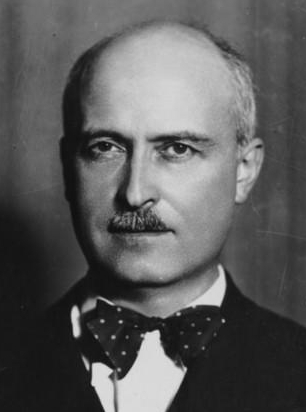
Ibert is one of those French composers who did everything beautifully and seemingly effortlessly — his music sparkles with wit, color, and Gallic elegance. A Prix de Rome winner who became director of the Villa Medici and the Paris Opéra, he was at the center of French musical life for decades. His orchestration is among the most brilliant and transparent of the 20th century.
0 concerts featuring works by this composer
No upcoming performances scheduled for works by Jacques Ibert.
New to Jacques Ibert? These works make great entry points.
Impossibly fun and brilliantly orchestrated — if this doesn't make you smile, nothing will.
Gorgeous, atmospheric orchestral writing that's immediately appealing to anyone who loves Ravel or Debussy.
Trois pièces brèves for Wind Quintet
A sparkling chamber work that showcases Ibert's wit and craftsmanship in an intimate setting — a favorite of wind players everywhere.
Add to Spotlight to be notified when a piece is scheduled near you.
The works that define Jacques Ibert's legacy.
A ravishing orchestral triptych evoking Mediterranean ports — Ibert's calling card and one of the most colorful scores of the 1920s.
A hilariously witty orchestral suite that's become a beloved concert staple — pure joy from first note to last.
One of the finest 20th-century flute concertos, combining virtuosity, lyricism, and Ibert's trademark elegance.
Musical style, influences, and more
Ibert's music is characterized by luminous orchestral color, harmonic sophistication worn lightly, and a Gallic wit that can shift from sparkling humor to delicate lyricism in a heartbeat. His orchestration is a masterclass in clarity and economy — every instrument sings. He was stylistically independent, drawing on Impressionism, Neoclassicism, and jazz without belonging to any school.
Studied at the Paris Conservatoire under Fauré and was friends with the members of Les Six, though he never joined any group. He admired Ravel's craftsmanship and Debussy's color, and his lighter works share kinship with Poulenc's wit. His film music influenced and was influenced by the broader French cinema tradition.
His early works, including the brilliant orchestral triptych Escales (1922), established his colorist credentials. Through the 1930s and 40s he balanced concert music with acclaimed film scores and theatrical works. His later works grew somewhat more austere and concentrated while retaining their characteristic polish and transparency.
Ibert's Divertissement, one of the funniest pieces in the orchestral repertoire, began life as incidental music for a Labiche farce. The finale literally quotes the Wedding March while everything musically falls apart around it — a police whistle blows, wrong notes pile up, and the whole thing ends in cheerful chaos. It's the classical equivalent of a comedy sketch, and orchestras love playing it.
Ibert was a prolific and accomplished film composer who scored dozens of films, including Orson Welles's Macbeth (1948). His film work deserves to be studied alongside his concert music — the two worlds fed each other constantly.
Ibert is a reliable presence on orchestral programs — Escales and Divertissement are perennial favorites, and the Flute Concerto is standard repertoire. The Concertino da camera for saxophone is ubiquitous in the saxophone world. Despite this, much of his catalog (operas, ballets, film scores) remains underperformed. He's evergreen rather than trendy.
61 works in catalog
Browse the catalog below. Add any work to your Spotlight to track when it is performed live.
Showing 30 of 61 works