1
Miserere
Hauntingly beautiful and deeply moving choral music that needs no background in contemporary music to appreciate.
b. 1959
1 work
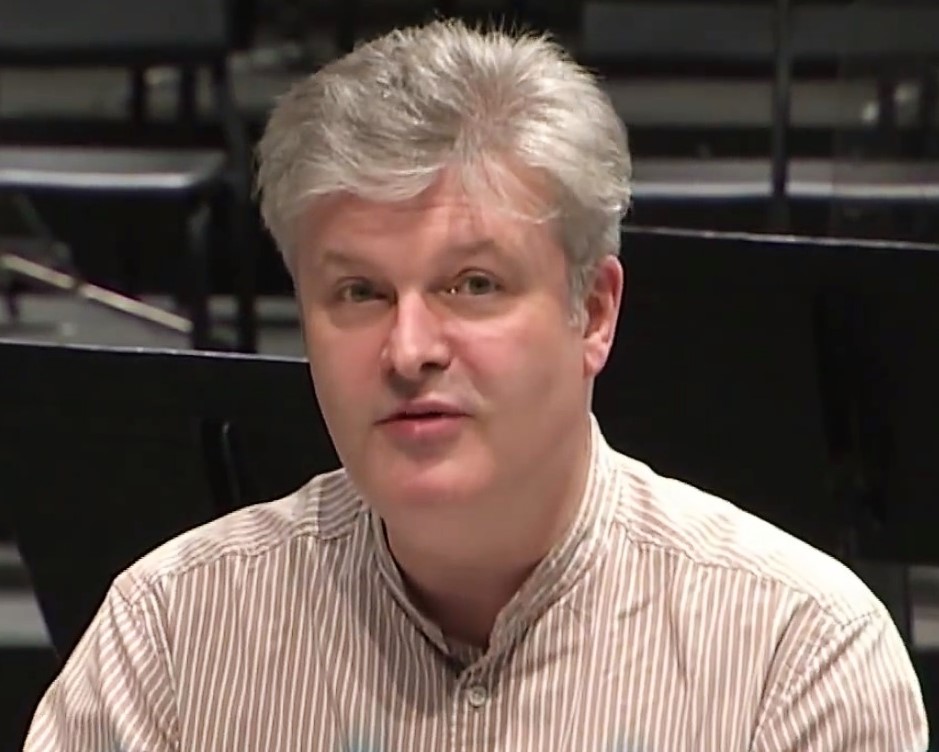
MacMillan is the most prominent Scottish composer of his generation and one of the most performed living composers worldwide. His music draws on deep wells of Scottish identity, Catholic faith, and social justice with a visceral emotional intensity that grabs listeners by the throat. Whether writing for massive orchestral forces or unaccompanied choir, his music has an unmistakable urgency and sincerity.
0 concerts featuring works by this composer
No upcoming performances scheduled for works by James MacMillan.
New to James MacMillan? These works make great entry points.
Miserere
Hauntingly beautiful and deeply moving choral music that needs no background in contemporary music to appreciate.
The Confession of Isobel Gowdie
Powerfully narrative and emotionally direct — one of the most accessible major orchestral works of the late 20th century.
O Radiant Dawn
A short, luminous Advent anthem that's become one of the most beloved new choral works — perfect in its simplicity.
Add to Spotlight to be notified when a piece is scheduled near you.
The works that define James MacMillan's legacy.
The Confession of Isobel Gowdie
His breakthrough masterpiece — a searing orchestral meditation on religious persecution in Scotland that remains his most iconic work.
Miserere
A devastating a cappella choral work that has become one of the most performed sacred pieces of recent decades.
St. John Passion
A monumental Passion setting that places MacMillan in the great tradition of Bach while speaking in a thoroughly modern voice.
Musical style, influences, and more
MacMillan's music combines modernist techniques — clusters, extended techniques, complex rhythms — with an expressive directness rooted in Scottish folk music, Catholic liturgy, and plainchant. His orchestration is powerful and often explosive, but he's equally capable of rapt, luminous stillness. There's a raw, almost physical intensity to his climaxes that sets him apart from more cerebral contemporaries.
Studied with Kenneth Leighton and was deeply impacted by the music of Messiaen, whose Catholic mysticism resonated with his own faith. Scottish folk music, particularly pibroch (bagpipe music), is a constant presence, as are the traditions of Catholic sacred music. He's a champion of younger Scottish composers and a major force in British musical life.
His early works explored Scottish identity and social themes with modernist intensity. The Confession of Isobel Gowdie launched him internationally in 1990. Since then he's produced a vast body of choral, orchestral, and operatic music, with his sacred works increasingly central to his output. Recent years have seen major liturgical commissions including a St. Luke Passion and a Christmas Oratorio.
MacMillan's breakthrough came with The Confession of Isobel Gowdie (1990), premiered at the BBC Proms, which drew on the story of a woman tortured and executed for witchcraft in 17th-century Scotland. The audience's stunned, prolonged silence before erupting into applause told MacMillan he'd achieved something extraordinary — a piece that makes historical injustice feel viscerally present.
MacMillan founded the Cumnock Tryst festival in his hometown in rural Ayrshire, bringing world-class contemporary music to a former mining community. It reflects his deep commitment to making concert music accessible beyond the major cities.
MacMillan is one of the most frequently performed living composers, especially in the UK. His choral works appear constantly in sacred and concert settings, and major orchestras regularly commission and program his music. He's been a fixture of the BBC Proms for decades. His music is equally at home in concert halls and cathedrals.
1 works in catalog
Browse the catalog below. Add any work to your Spotlight to track when it is performed live.
Showing 1 of 1 works