1
Sinfonia in D Major, Op. 18 No. 4
Cheerful and elegant, perfect introduction to his galant style.
1735–1782
149 works
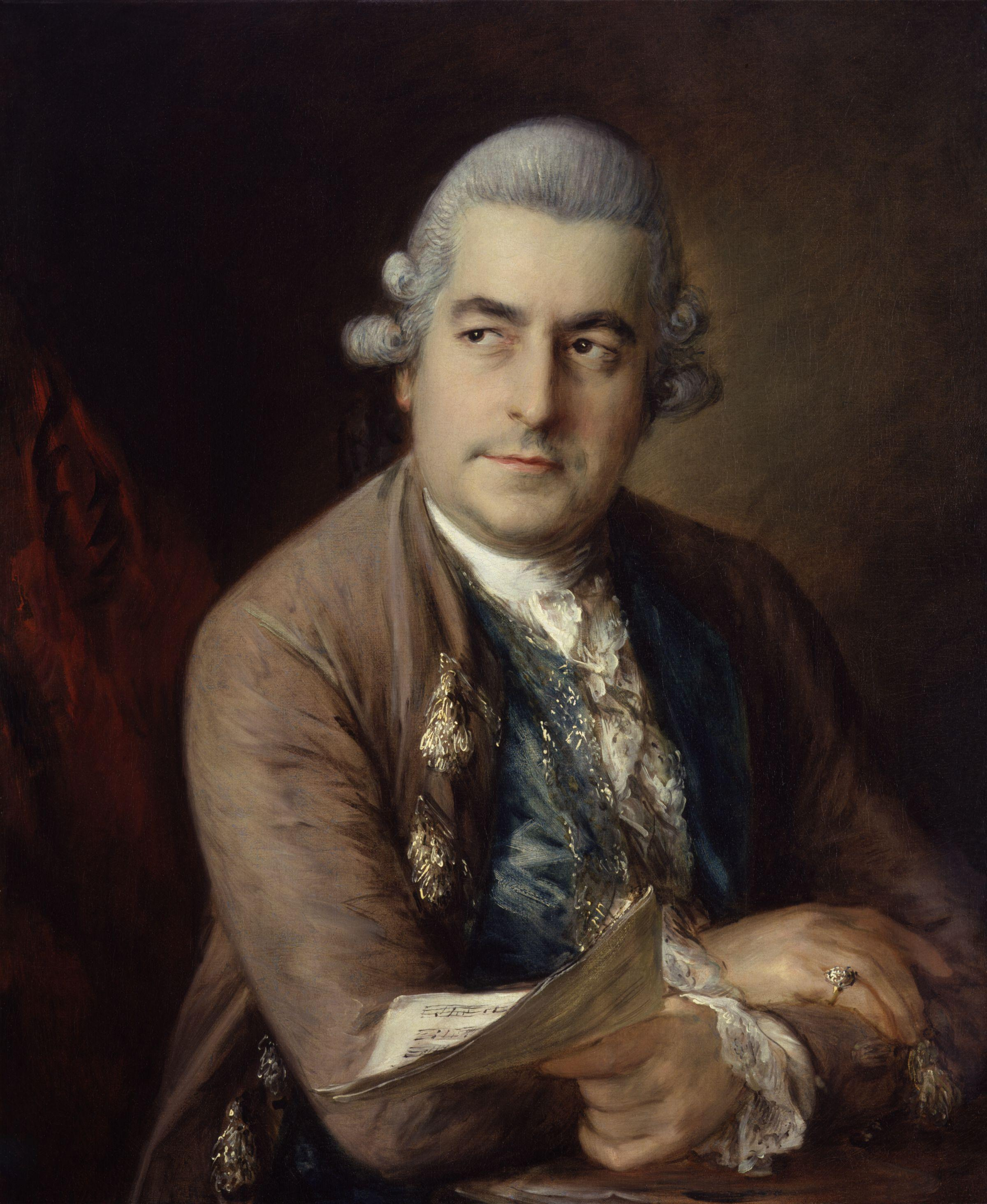
The youngest son of J.S. Bach became the 'London Bach,' transforming his father's contrapuntal legacy into the elegant, singing style that would define the Classical era. He taught the young Mozart, influenced his style, and helped invent the piano concerto as we know it. He's the bridge between Baroque and Classical, tragically overshadowed by his father's towering reputation.
0 concerts featuring works by this composer
No upcoming performances scheduled for works by Johann Christian Bach.
New to Johann Christian Bach? These works make great entry points.
Sinfonia in D Major, Op. 18 No. 4
Cheerful and elegant, perfect introduction to his galant style.
Immediately appealing with Mozart-like grace and charm.
Quintet in D Major for Flute and Strings
Chamber music that showcases his melodic gifts in intimate setting.
Add to Spotlight to be notified when a piece is scheduled near you.
The works that define Johann Christian Bach's legacy.
Sinfonia in G Minor, Op. 6 No. 6
A rare minor-key symphony showing emotional depth unusual for the galant style.
A beautiful example of the early Classical concerto that influenced Mozart's own concertos.
Demonstrates his role in establishing the keyboard concerto format.
Musical style, influences, and more
J.C. Bach's music favors graceful melody over contrapuntal complexity, with singable themes, balanced phrases, and galant style elegance. His harmonies are simpler than his father's, relying on clear tonal centers and conventional progressions. He essentially invented the concert concerto's three-movement fast-slow-fast format and pioneered the piano as a solo instrument in public concerts.
Trained by his father J.S. Bach until age fifteen, then studied with his brother C.P.E. Bach before moving to Italy where he absorbed opera style. Living in London, he became part of the cosmopolitan galant movement. His music influenced Mozart profoundly—Mozart arranged several of J.C. Bach's sonatas and absorbed his melodic style and formal clarity.
After his father's death, he moved to Italy, converted to Catholicism, and became an opera composer. Moving to London in 1762, he established himself as a fashionable concert impresario and composer, creating the Bach-Abel concert series. His later years brought financial struggles despite his fame, and he died in debt, but his music had already shaped the coming Classical style.
When the eight-year-old Mozart visited London in 1764, J.C. Bach took the child prodigy on his knee at the keyboard and they played duets together, improvising and delighting the assembled company. Mozart never forgot this kindness and considered J.C. Bach one of his most important influences—when he heard of Bach's death, Mozart wrote that it was 'a loss to the musical world.'
J.C. Bach was one of the first composers to give public concerts featuring the piano (then a new instrument) rather than harpsichord—his London concerts helped establish the piano as the dominant keyboard instrument and created the template for the modern piano recital.
J.C. Bach is moderately programmed, usually by period instrument ensembles exploring Classical-era repertoire. His music appears less frequently than it deserves given its quality and historical importance. Recent decades have seen modest revival interest as the early Classical period gets more attention beyond Haydn and Mozart.
149 works in catalog
Browse the catalog below. Add any work to your Spotlight to track when it is performed live.
Showing 30 of 149 works