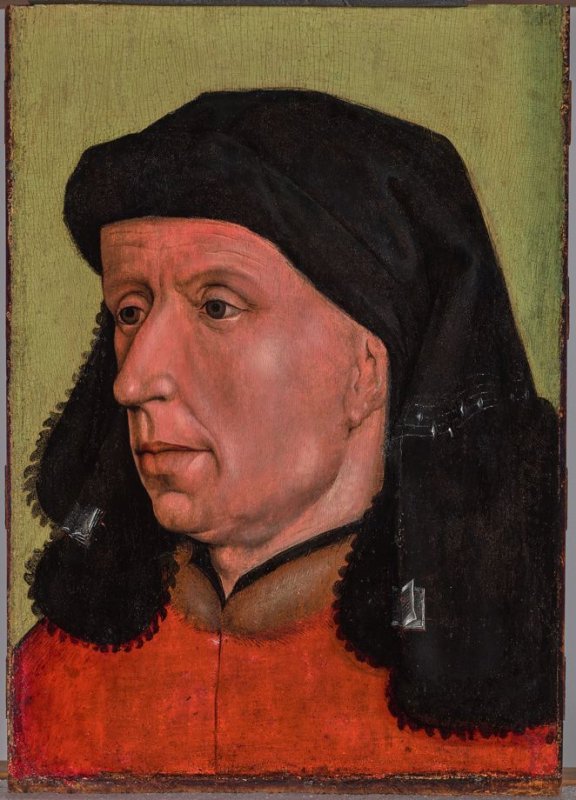
1
Alma redemptoris mater
A beautiful motet that introduces his flowing polyphony without overwhelming complexity.
1410–1497
30 works
Ockeghem was the Renaissance master who could write a mass in thirty-six parts or compose a canon that works forward and backward simultaneously—his technical virtuosity is staggering, yet his music sounds effortlessly serene. He influenced every Franco-Flemish composer after him and essentially invented the procedures that would define polyphonic music for a century. He's the composer's composer of the early Renaissance.
0 concerts featuring works by this composer
No upcoming performances scheduled for works by Johannes Ockeghem.
New to Johannes Ockeghem? These works make great entry points.
A beautiful motet that introduces his flowing polyphony without overwhelming complexity.
D'ung aultre amer (chanson)
A secular song showing his gifts extend beyond sacred music, more immediately accessible.
Approachable sacred work that captures his serene, timeless quality.
Add to Spotlight to be notified when a piece is scheduled near you.
The works that define Johannes Ockeghem's legacy.
A technical marvel using mensuration canons throughout, yet it sounds beautiful rather than academic.
Based on the intervals E-E, this mass showcases his ability to build vast structures from tiny seeds.
The earliest surviving polyphonic requiem, historically crucial and musically profound.
Musical style, influences, and more
Ockeghem's music features exceptionally long, flowing melodic lines that seem to float independent of bar lines (which didn't exist yet anyway), creating a sense of timeless suspension. His counterpoint is incredibly complex but serves expressive ends, not just intellectual games. He favored low vocal ranges—bass voices especially—creating a darker, richer sound than many contemporaries, and his harmonic language included daring chromatic inflections for the period.
Likely studied with Gilles Binchois, absorbing the Burgundian style. He served at the French royal court for decades, making him central to musical developments. His students and followers included Josquin des Prez, Jacob Obrecht, and Antoine Brumel—essentially the next generation's stars. He defined the Franco-Flemish polyphonic tradition that would dominate European music for a century.
Spent most of his career at the French royal court, achieving security and prestige that allowed him to compose without commercial pressure. His output was relatively small—only about a dozen masses and twenty motets survive—suggesting he prioritized quality over quantity. His style remained remarkably consistent, perfecting polyphonic procedures rather than dramatically evolving them.
When Ockeghem died, fellow composers wrote an astonishing number of musical tributes (déplorations) mourning his passing—Josquin's 'Nymphes des bois' is the most famous, a heartbroken lament for the master. This outpouring suggests Ockeghem was not only revered as a composer but deeply loved as a person and teacher.
Ockeghem composed the earliest surviving polyphonic requiem mass (Missa pro defunctis), establishing musical templates for the requiem that would last for centuries—yet this groundbreaking work is far less performed than later requiems by Mozart or Verdi.
Ockeghem is a specialist interest, performed primarily by early music vocal ensembles rather than appearing on mainstream classical programs. His music is experiencing increased interest as Renaissance polyphony gains appreciation beyond Palestrina. He's evergreen within early music circles but underexplored in wider classical programming.
30 works in catalog
Browse the catalog below. Add any work to your Spotlight to track when it is performed live.
Showing 30 of 30 works