1
Symphony No. 94 in G Major 'Surprise'
The sudden loud chord in the slow movement is famous, but the whole symphony shows his wit and craft perfectly.
1732–1809
15 works
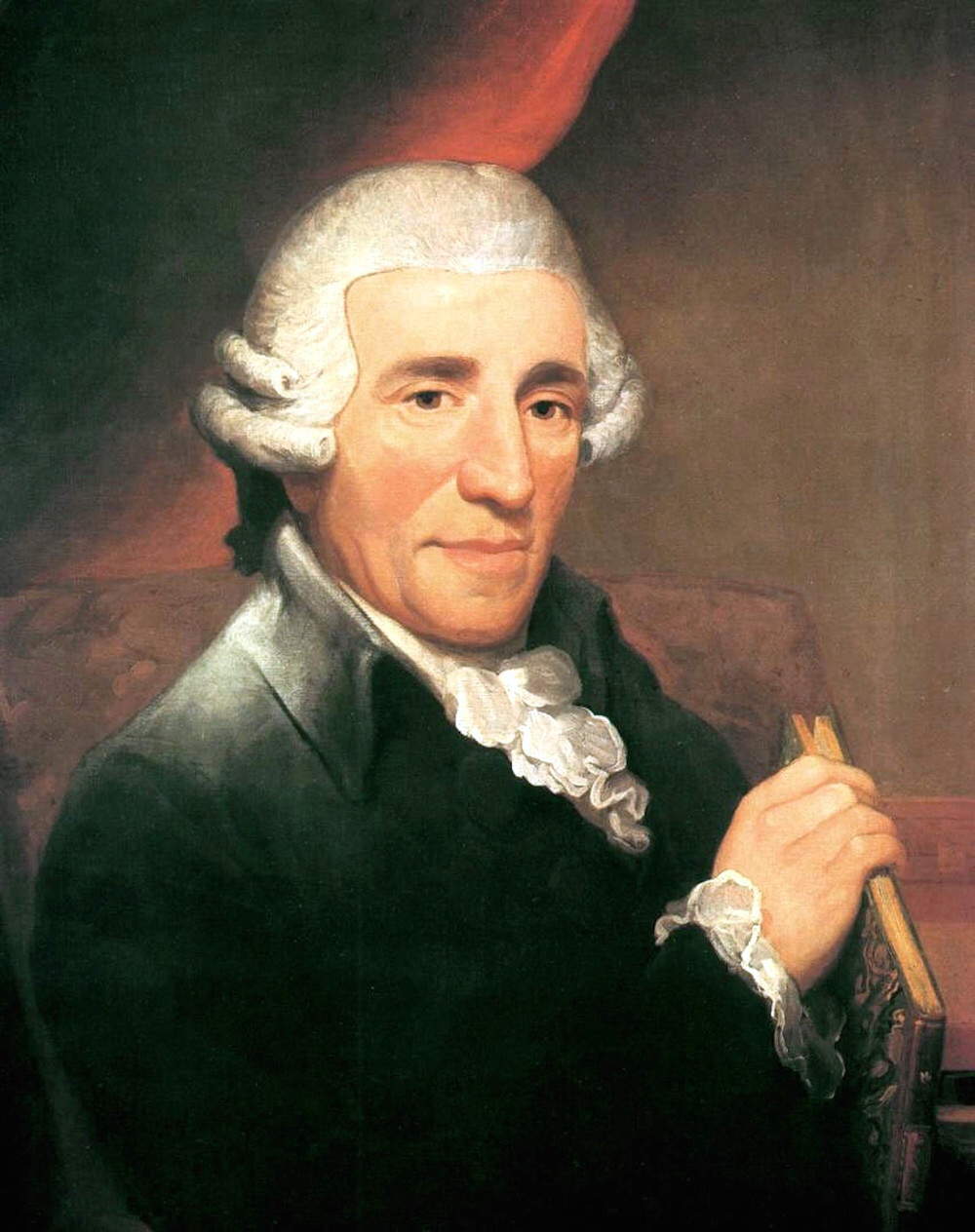
Haydn was the architect of the Classical style—he essentially invented the string quartet and symphony as we know them, creating templates that influenced everyone from Mozart to Beethoven. His music combines formal perfection with wit, invention, and surprising emotional depth, proving that structure and spontaneity aren't opposites.
0 concerts featuring works by this composer
No upcoming performances scheduled for works by Joseph Haydn.
New to Joseph Haydn? These works make great entry points.
Symphony No. 94 in G Major 'Surprise'
The sudden loud chord in the slow movement is famous, but the whole symphony shows his wit and craft perfectly.
A showpiece that's tuneful and perfectly crafted—it's become the trumpet concerto everyone plays.
String Quartet in D Major, Op. 64 No. 5 'Lark'
The soaring first violin line is immediately appealing, and the whole work is charming and accessible.
Add to Spotlight to be notified when a piece is scheduled near you.
The works that define Joseph Haydn's legacy.
Symphony No. 104 in D Major 'London'
The culmination of his symphonic art—it's perfectly balanced, witty, and emotionally satisfying.
String Quartet in C Major, Op. 76 No. 3 'Emperor'
Features the melody that became the German national anthem—it's Haydn's quartet writing at its most sublime.
The Creation
His oratorio depicting Genesis is joyful, sophisticated, and one of the great choral works—nature depicted with wonder.
Musical style, influences, and more
Haydn writes with Classical clarity—balanced phrases, clear harmonic progressions, logical development from simple motives. But within these forms, he's endlessly inventive—unexpected modulations, witty thematic transformations, and rhythmic games that keep listeners alert. His orchestration is transparent and colorful, favoring dialogue between instruments over massive blocks of sound. There's often a playful quality even in serious works, and his slow movements can achieve remarkable depth.
He studied C.P.E. Bach's works and absorbed his expressive keyboard style. He worked alongside Mozart in Vienna and they influenced each other profoundly. Beethoven studied with him (though the relationship was complicated). His folk music influences from Croatian and Hungarian traditions add spice to his Austrian Classicism. He influenced virtually every composer who followed by establishing symphonic and quartet forms.
His early career was in Vienna as freelance musician and teacher. His long service at the Esterházy court (1761-1790) gave him the laboratory to develop the symphony and quartet, writing prolifically in relative isolation. His late period brought two triumphant London visits that produced his greatest symphonies and international fame. His final years in Vienna saw him composing oratorios and quartets of remarkable depth.
Haydn's 'Farewell' Symphony famously has musicians leaving the stage one by one during the finale—he wrote it to hint to his employer Prince Esterházy that the court musicians wanted to go home to their families after a long residence. The prince got the message and dismissed the court early. Musical wit as labor negotiation!
Haydn wrote 126 trios for baryton (a now-obscure string instrument) for his patron Prince Esterházy who played the instrument—these neglected works show his inventiveness even when writing for limited audience and unusual instrumentation.
Haydn is evergreen—his London symphonies, popular quartets, and Creation appear constantly. The Trumpet Concerto is a staple. His piano sonatas and lesser-known symphonies deserve more attention than they get. He's secure in the canon, though sometimes overshadowed by Mozart and Beethoven. Recent scholarship has deepened appreciation of his sophistication and wit.
15 works in catalog
Browse the catalog below. Add any work to your Spotlight to track when it is performed live.
Showing 15 of 15 works