1
Violin Concerto No. 1 in A Major, Op. 1
Early concerto that's immediately appealing and less demanding than later works, perfect introduction to his violin writing.
1784–1859
131 works
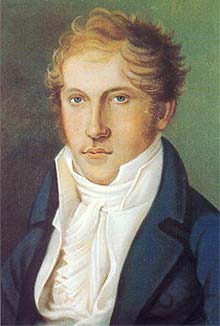
The violin virtuoso who wrote 15 symphonies, 10 operas, and 34 string quartets while pioneering the use of the conductor's baton and inventing the violin chin rest. Spohr was Beethoven's contemporary who chose a more conservative Romantic path, creating music of refined lyricism and chromaticism that influenced Wagner yet remained fundamentally Classical in structure. Once hugely famous, he's now unjustly neglected, though his violin concertos and chamber music deserve far wider hearing.
0 concerts featuring works by this composer
No upcoming performances scheduled for works by Louis Spohr.
New to Louis Spohr? These works make great entry points.
Early concerto that's immediately appealing and less demanding than later works, perfect introduction to his violin writing.
Octet in E Major, Op. 32
Tuneful chamber work for strings and winds that's Schubertian in charm while showing Spohr's distinctive chromatic touches.
String Quintet in G Minor, Op. 33, No. 2
Accessible chamber work demonstrating his string writing and melodic gifts in relatively conventional format.
Add to Spotlight to be notified when a piece is scheduled near you.
The works that define Louis Spohr's legacy.
Operatic violin concerto structured like dramatic scene—his most famous concerto, blending virtuosity with vocal-style lyricism.
Nonet in F Major, Op. 31
For strings and winds, this chamber masterpiece balances Classical form with Romantic expression, showing his chamber music at its finest.
Symphony No. 4 in E-flat Major, Op. 86, 'Die Weihe der Töne'
Programmatic symphony inspired by a poem about music's power, demonstrating his symphonic ambitions and chromatic sophistication.
Musical style, influences, and more
Spohr's music is characterized by elegant melodies, sophisticated chromatic harmony that sometimes points toward Wagner, and superbly idiomatic string writing (he was a virtuoso violinist). His forms are Classical but expanded, and his orchestration is refined without being innovative. The music has a distinctive melancholy quality, often serious rather than dramatic, and his harmonic adventurousness sits within fundamentally tonal thinking.
He absorbed Mozart and Haydn as foundation, was Beethoven's contemporary (though chose different path), and his chromaticism influenced Wagner (who admired him). As violinist, he inherited Viotti's tradition and passed it forward. Mendelssohn championed his music. His influence faded as Romantic aesthetics moved toward more radical expression than his refined approach.
Early success as violin virtuoso touring Europe established his reputation. Appointment as Kassel Kapellmeister (1822-1857) provided stability for composing while conducting and administering musical life. Consistent output across all genres through long career, though style remained relatively constant. Growing conservatism as Romantic movement radicalized left him seeming old-fashioned by career's end.
Spohr is credited with introducing the conductor's baton—before him, conductors led from the keyboard or by waving rolls of paper. His innovation of using a wooden baton for clear, precise beat-giving seems obvious now but was revolutionary, changing how orchestras rehearsed and performed. This practical contribution outlasted his compositional fame.
He was an early and passionate advocate for Wagner's music, conducting early performances of 'Tannhäuser' and 'The Flying Dutchman' when Wagner was still controversial—this support from an establishment figure helped Wagner's acceptance, yet Spohr's own more conservative music was eclipsed by the revolution he championed.
Spohr is sadly neglected today, appearing primarily on period instrument and historically-informed programs. His violin concertos are championed by violinists seeking Romantic repertoire beyond the usual suspects. Chamber music appears occasionally on specialist programs. Ripe for rediscovery—he's accessible enough for mainstream audiences while being sophisticated enough for serious programming. Growing interest in early Romantic repertoire could bring revival.
131 works in catalog
Browse the catalog below. Add any work to your Spotlight to track when it is performed live.
Showing 30 of 131 works