1
El amor brujo — 'Ritual Fire Dance'
Electrifying, rhythmically intoxicating, and immediately memorable — this single movement is the most famous entry point to Falla's world.
1876–1946
34 works · 6 upcoming works performed
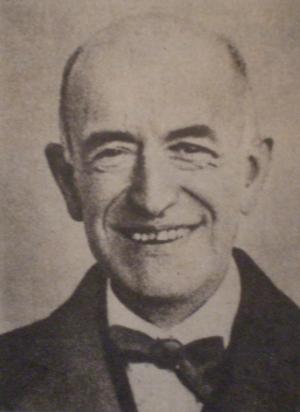
Manuel de Falla is Spain's greatest classical composer — a perfectionist who distilled the soul of Andalusian music into works of exquisite craftsmanship and burning intensity. His output is small but virtually flawless: every piece sounds both deeply Spanish and utterly universal, radiating heat, color, and rhythmic vitality. If you've ever been stirred by the sound of flamenco, Falla shows you what happens when that fire meets a master's discipline.
2 concerts featuring works by this composer

Never miss a Falla performance
Get notified when new concerts are announced near you
New to Manuel de Falla? These works make great entry points.
Electrifying, rhythmically intoxicating, and immediately memorable — this single movement is the most famous entry point to Falla's world.
Three dances of irresistible Spanish color and rhythmic verve — the 'Farruca' and final 'Jota' are showstoppers.
Siete canciones populares españolas (Seven Spanish Popular Songs)
Falla's exquisite art-song arrangements of folk melodies are instantly appealing and reveal his gift for transforming simple tunes into polished gems.
Add to Spotlight to be notified when a piece is scheduled near you.
The works that define Manuel de Falla's legacy.
El amor brujo (Love, the Magician)
A ballet of bewitching flamenco-infused orchestral color, whose 'Ritual Fire Dance' has become one of the most recognizable melodies in Spanish music.
Noches en los jardines de España (Nights in the Gardens of Spain)
Three symphonic impressions for piano and orchestra that capture the perfumed, nocturnal sensuality of Andalusian gardens — Falla's most evocative orchestral work.
A brilliant, blazingly colorful ballet score commissioned by Diaghilev that brings 18th-century Spanish village life to vivid, dancing life.
Musical style, influences, and more
Falla's music fuses Andalusian folk elements — flamenco rhythms, cante jondo inflections, guitar-like textures — with the harmonic sophistication of French impressionism and a neoclassical clarity of form. His orchestration is lean and precise, every note earning its place, with a percussive brilliance that evokes the clatter of castanets and the snap of a dancer's heels. His later works achieve an almost ascetic refinement, paring Spanish essence to its purest musical core.
Falla studied with Felipe Pedrell, the father of Spanish musical nationalism, who taught him to look to folk music for inspiration. Seven years in Paris (1907-1914) brought him into the orbit of Debussy, Ravel, and Dukas, whose impressionist techniques transformed his approach. Stravinsky's neoclassicism influenced his later, more austere works. His friendship with García Lorca and the poets of the Generation of '27 connected his music to Spain's broader cultural renaissance.
Falla's early works, including the opera La vida breve, established his Andalusian voice. His Paris years refined his technique, producing the ballets and piano works that made his international reputation. El amor brujo and The Three-Cornered Hat represent the peak of his 'national' style. After 1920, he turned toward a more austere neoclassicism in the Harpsichord Concerto and the puppet opera, with his late years consumed by the never-finished Atlántida.
Falla was so fastidious that he could spend years perfecting a single work — his harpsichord concerto took four years to complete, and the puppet opera El retablo de maese Pedro was painstakingly revised. He left Spain after the Civil War, spending his final years in Argentina, where he worked obsessively on his unfinished cantata Atlántida until his death, never satisfied enough to declare it complete.
Falla's Harpsichord Concerto (1926) was a pioneering work in the early music revival — written for Wanda Landowska, it helped legitimize the harpsichord as a modern concert instrument and influenced subsequent concertos by Poulenc and others.
Falla is an evergreen presence on concert programs — the Three-Cornered Hat suites and Nights in the Gardens of Spain appear regularly with major orchestras. The Seven Songs are recital staples. El amor brujo receives both concert and staged performances. His complete output is small enough that audiences can encounter most of it in a few concerts, making him ideal for festival or focus programming.
34 works in catalog
Browse the catalog below. Add any work to your Spotlight to track when it is performed live.
Showing 30 of 34 works