1
La Rêveuse
A single, perfect miniature — gentle, meditative, and immediately captivating, requiring no previous experience with Baroque music.
1656–1728
65 works
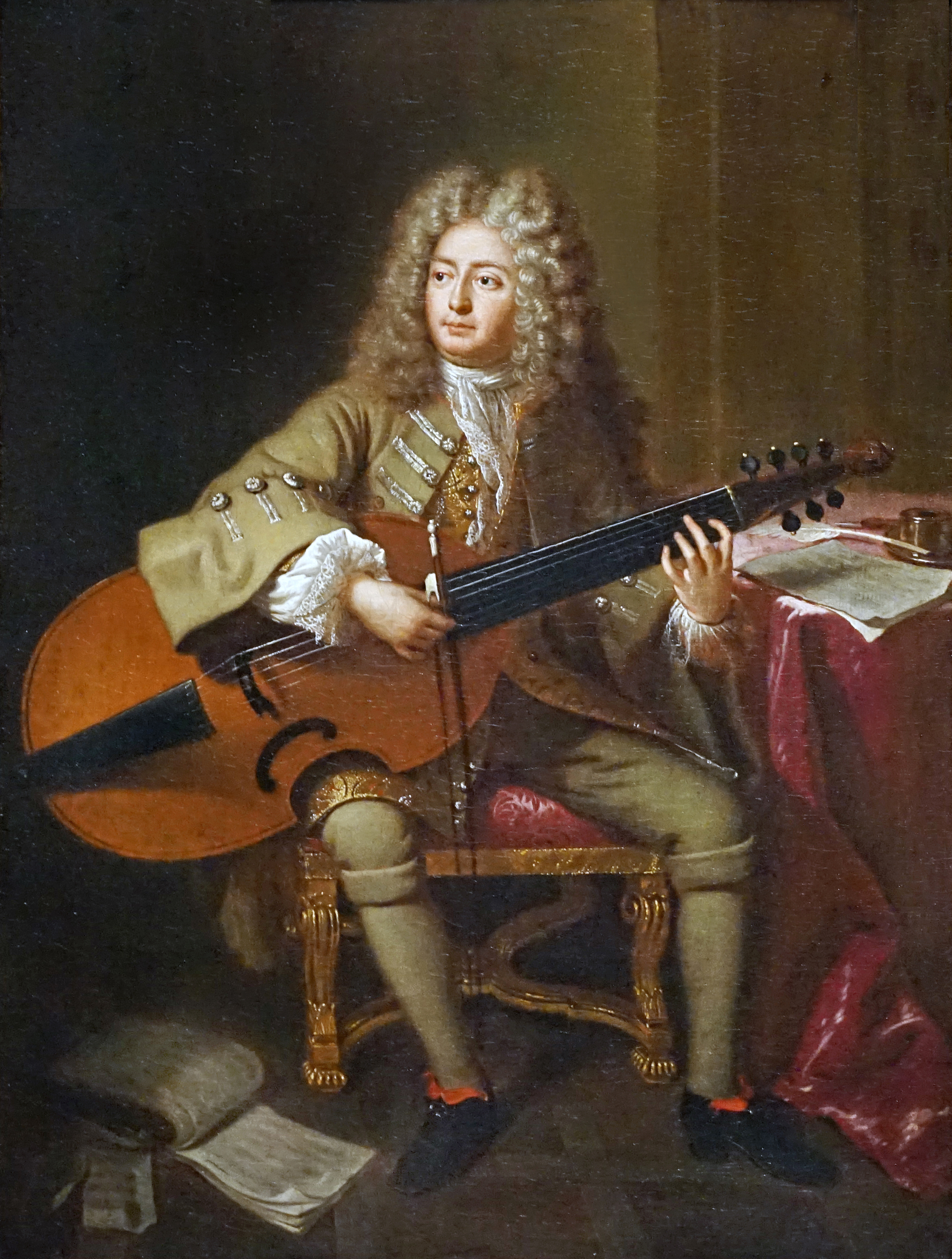
Marin Marais was the king of the viola da gamba — a virtuoso player and prolific composer who elevated the bass viol into one of the most expressive instruments of the French Baroque. His five books of Pièces de viole are a treasure trove of character, color, and emotion, ranging from stately court dances to music of heartbreaking tenderness. The film Tous les matins du monde brought his story and his music to millions, but the recordings barely scratch the surface.
0 concerts featuring works by this composer
No upcoming performances scheduled for works by Marin Marais.
New to Marin Marais? These works make great entry points.
La Rêveuse
A single, perfect miniature — gentle, meditative, and immediately captivating, requiring no previous experience with Baroque music.
Marais's brilliant set of 32 variations on the famous Spanish theme is an ideal introduction to the viola da gamba's expressive range — from delicate to virtuosic.
Sonnerie de Sainte-Geneviève du Mont de Paris
A hypnotic trio for viol, violin, and continuo built over a repeating bass — mesmerizing, accessible, and perfect for newcomers.
Add to Spotlight to be notified when a piece is scheduled near you.
The works that define Marin Marais's legacy.
The second book contains some of Marais's most expressive and varied viol music, including the famous 'Tombeau pour Monsieur de Sainte-Colombe.'
La Rêveuse
A hauntingly beautiful character piece whose dreamy, wandering melody captures the intimate poetry of the French viol tradition at its finest.
Alcyone — Tempête (Marche pour les matelots and storm scene)
A pioneering orchestral storm scene that was the special-effects blockbuster of its day — vivid, dramatic, and surprisingly powerful.
Musical style, influences, and more
Marais's music is defined by an extraordinary sensitivity to the viola da gamba's tonal qualities — rich, singing lines that exploit the instrument's warm middle register and capacity for subtle ornamentation. His harmonic language is sophisticated for its era, with expressive dissonances and unexpected modulations that create moments of real emotional depth. His character pieces (tombeau, plainte, rêverie) are miniature portraits of remarkable psychological acuity.
Marais studied with the legendary Monsieur de Sainte-Colombe, whose austere, expressive viol playing deeply shaped his approach (their relationship was dramatized in Tous les matins du monde). He also studied composition with Lully, absorbing the French operatic tradition. His position at the court of Louis XIV placed him at the center of French musical life, where he helped define the goût français for a generation.
Marais published five books of Pièces de viole between 1686 and 1725, charting the evolution of French viol music across four decades. His early books are more courtly and conventional; the later books grow increasingly experimental, exploratory, and personal. He also composed four operas, of which Alcyone (1706) contains a famous tempest scene that was a marvel of Baroque theatrical effect.
Marais composed a piece called 'Tableau de l'opération de la taille' — a musical depiction of a gallstone operation, complete with programmatic annotations describing the patient's anxiety, the insertion of surgical instruments, blood flow, and cries of pain. It's simultaneously horrifying and fascinating, and one of the most unusual pieces in all of Baroque music.
Marais's operas, particularly Alcyone, deserve far more attention than they receive — the tempest scene in Act IV was so spectacular in its original production that it became one of the most talked-about theatrical effects of the era, using innovative orchestral techniques to simulate a storm.
Marais is a staple of the viola da gamba world and appears regularly in early music concerts and festivals. The film Tous les matins du monde (1991) dramatically increased public awareness and recording activity. La Rêveuse and Les Folies d'Espagne are frequently programmed as standalone pieces. His operas are receiving increasing attention from period-instrument opera companies. He's a reliable draw for early music audiences.
65 works in catalog
Browse the catalog below. Add any work to your Spotlight to track when it is performed live.
Showing 30 of 65 works