1
Es ist ein Ros entsprungen
You almost certainly know this Christmas hymn — now discover the composer behind it and the rich tradition it comes from.
1571–1621
142 works
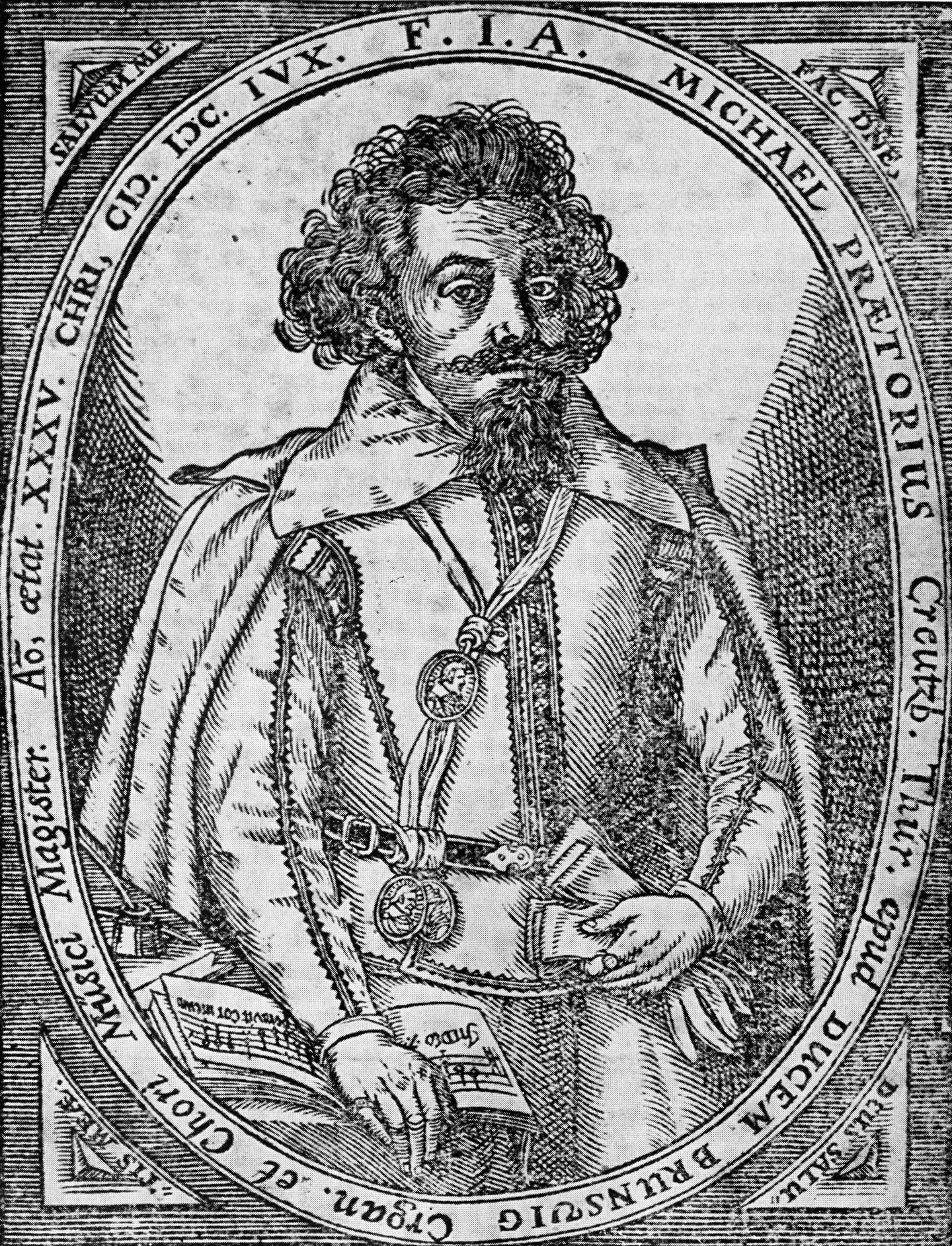
Michael Praetorius was the great encyclopedist of early Baroque music — a composer, organist, and scholar whose colossal output of sacred music and whose monumental Syntagma Musicum treatise documented virtually everything there was to know about music in his era. His Christmas music, particularly the joyous settings of 'Es ist ein Ros' entsprungen,' has become so embedded in Western culture that most people don't realize they're hearing a 400-year-old composition.
0 concerts featuring works by this composer
No upcoming performances scheduled for works by Michael Praetorius.
New to Michael Praetorius? These works make great entry points.
You almost certainly know this Christmas hymn — now discover the composer behind it and the rich tradition it comes from.
Terpsichore — Dances (Selected)
Bright, rhythmic, and infectiously fun — these dances are immediately appealing and perfect for anyone new to early music.
In dulci jubilo (Polychoral Setting)
A festive Christmas setting for multiple choirs that combines familiar melody with exhilarating spatial effects.
Add to Spotlight to be notified when a piece is scheduled near you.
The works that define Michael Praetorius's legacy.
Es ist ein Ros entsprungen (Lo, How a Rose E'er Blooming)
One of the most beloved hymn settings in Western music — its gentle, rocking harmonies have become synonymous with Christmas across denominations.
Terpsichore — Selected Dances
Over 300 French court dances preserved and arranged for instrumental ensemble — an inexhaustible treasury of elegant, rhythmically vital music.
Massive polychoral works combining German hymn melodies with Venetian-style grandeur — Praetorius at his most spectacular and ambitious.
Musical style, influences, and more
Praetorius worked in multiple styles simultaneously — from austere Renaissance polyphony to the newest Venetian polychoral techniques he imported to Germany. His sacred music is characterized by bold contrasts of texture and forces, from intimate solo voices to massive polychoral extravaganzas with multiple choirs and instrumental groups. His dance collection Terpsichore shows equal mastery of secular, rhythmically vital music.
Praetorius was deeply influenced by the Venetian polychoral style of the Gabrielis, which he adapted for German Lutheran worship. He served as court Kapellmeister at Wolfenbüttel, where the resources of a major court allowed him to experiment with large forces. His Syntagma Musicum reveals an almost obsessive interest in every aspect of musical practice, from instrument construction to performance technique to compositional theory.
Praetorius spent most of his career at the Wolfenbüttel court, producing a staggering quantity of sacred music. His Musae Sioniae (1605-1610) alone contains over 1,200 settings of Protestant hymns. Terpsichore (1612) preserved over 300 French dances. His final years saw increasing engagement with the newest Italian techniques, which he synthesized with German traditions in his Polyhymnia works. His early death at 49 cut short this synthesis.
Praetorius's Syntagma Musicum Volume II contains detailed engravings of virtually every musical instrument known in early 17th-century Europe — drawn to precise scale so they could be compared. These illustrations remain one of our most valuable sources of information about historical instruments and are still referenced by instrument makers today.
Terpsichore, Praetorius's collection of over 300 dance pieces, is one of the largest and most important sources of early 17th-century dance music — it's a goldmine for early music ensembles and has provided the soundtrack for countless Renaissance faires and period films.
Praetorius's Christmas music is a holiday-season staple for choirs worldwide — 'Es ist ein Ros' entsprungen' is inescapable in December. The Terpsichore dances are regularly programmed by early music ensembles and provide festive, accessible concert fare. His polychoral works are less frequently heard but make spectacular effects in appropriate acoustic spaces. He's an ideal anchor for early Baroque programming.
142 works in catalog
Browse the catalog below. Add any work to your Spotlight to track when it is performed live.
Showing 30 of 142 works