1
Fairy Tale in F Minor, Op. 26, No. 3
One of his most immediately captivating Skazki — lyrical, atmospheric, and emotionally direct without sacrificing depth.
1880–1951
3 works
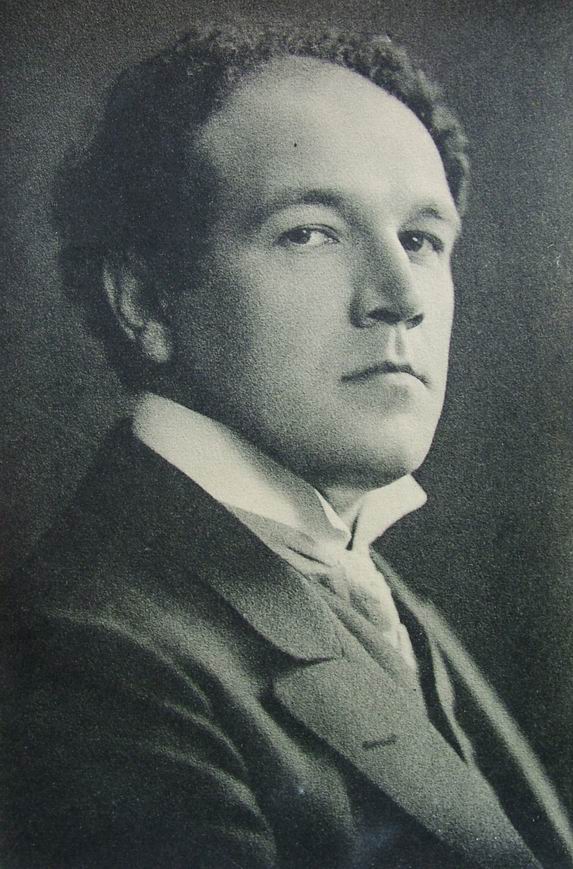
Medtner was the great Russian pianist-composer who refused to follow any trend — a contemporary of Rachmaninoff and Scriabin who held stubbornly to his own deeply personal, richly contrapuntal Romantic idiom while the musical world moved on around him. His piano music is some of the most technically demanding and intellectually rewarding in the repertoire, and his invention of the 'Fairy Tale' (Skazka) as a piano genre is uniquely his. He's the ultimate connoisseur's composer — once discovered, obsessively loved.
0 concerts featuring works by this composer
No upcoming performances scheduled for works by Nikolai Medtner.
New to Nikolai Medtner? These works make great entry points.
Fairy Tale in F Minor, Op. 26, No. 3
One of his most immediately captivating Skazki — lyrical, atmospheric, and emotionally direct without sacrificing depth.
Sonata-Reminiscenza in A Minor, Op. 38, No. 1
Heartbreakingly beautiful and more accessible than his larger sonatas — a perfect first encounter with Medtner's poetic world.
Canzona Serenata in D-flat Major, Op. 38, No. 6 (from Forgotten Melodies)
A singing, lyrical piece that showcases Medtner's melodic warmth — less imposing than the big sonatas but equally rewarding.
Add to Spotlight to be notified when a piece is scheduled near you.
The works that define Nikolai Medtner's legacy.
Piano Concerto No. 1 in C Minor, Op. 33
A powerful, concentrated single-movement concerto that announces Medtner's voice in the concerto genre with uncompromising intensity.
Sonata-Reminiscenza in A Minor, Op. 38, No. 1
Perhaps his most beautiful work — a dreaming, nostalgic sonata that unfolds like a half-remembered story of extraordinary poignancy.
Fairy Tales (Skazki), various opus numbers
His signature genre — dozens of pianistic narratives that range from tender lyricism to tempestuous drama, collectively forming a unique body of work.
Musical style, influences, and more
Medtner's music combines late-Romantic pianistic richness with an almost Brahmsian structural density and contrapuntal rigor. His themes are long-breathed and songlike, but their development is intensely worked — ideas transform and interweave with an organic complexity that rewards repeated listening. His harmonic language is tonal but chromatic and endlessly inventive, avoiding both Scriabin's mysticism and Rachmaninoff's sweet melancholy in favor of something more austere and intellectually bracing.
A close friend and peer of Rachmaninoff, who tirelessly championed his music and funded a recording project in Medtner's final years. He revered Beethoven above all and saw himself as carrying forward the German Romantic tradition through Russian soil. His teachers included Taneyev (the great contrapuntist) and Safonov at the Moscow Conservatory. He rejected modernism in all forms, which isolated him from musical fashion but preserved his artistic integrity.
His early works (the first Fairy Tales, early sonatas) established his distinctive voice in pre-Revolutionary Moscow. He left Russia in 1921 and settled eventually in London, where he composed in increasing obscurity. His works grew more complex and concentrated through the 1920s and 30s. His late recordings, made in poor health, capture a still-formidable pianist playing music of extraordinary depth and personal conviction.
Rachmaninoff considered Medtner the superior composer of the two and campaigned to get his music better known. He financially supported Medtner's recording sessions for HMV in London during the late 1940s, ensuring that the ailing composer's own interpretations of his music would survive. Rachmaninoff's generosity was extraordinary — the world's most famous pianist championing his less-famous friend's music above his own.
Medtner's three Piano Concertos are major works that deserve to stand alongside Rachmaninoff's in the repertoire. The Third, especially, is a vast, powerful single-movement work of symphonic ambition that is gradually gaining advocates among pianists seeking fresh concerto repertoire.
Medtner has a passionate cult following among pianists and connoisseurs, and his music is gaining ground steadily. Marc-André Hamelin, Daniil Trifonov, and other major pianists have championed his works. The Fairy Tales and the Sonata-Reminiscenza appear with increasing frequency on recital programs. The concertos are still rare but each performance generates enthusiastic response. He's the quintessential 'underrated' composer — once audiences hear him, they want more.
3 works in catalog
Browse the catalog below. Add any work to your Spotlight to track when it is performed live.
Showing 3 of 3 works