1
Kinderszenen (Scenes from Childhood), Op. 15
Thirteen miniatures including 'Träumerei'—they're accessible, beautiful, and capture Romantic nostalgia perfectly.
1810–1856
156 works · 4 upcoming works performed
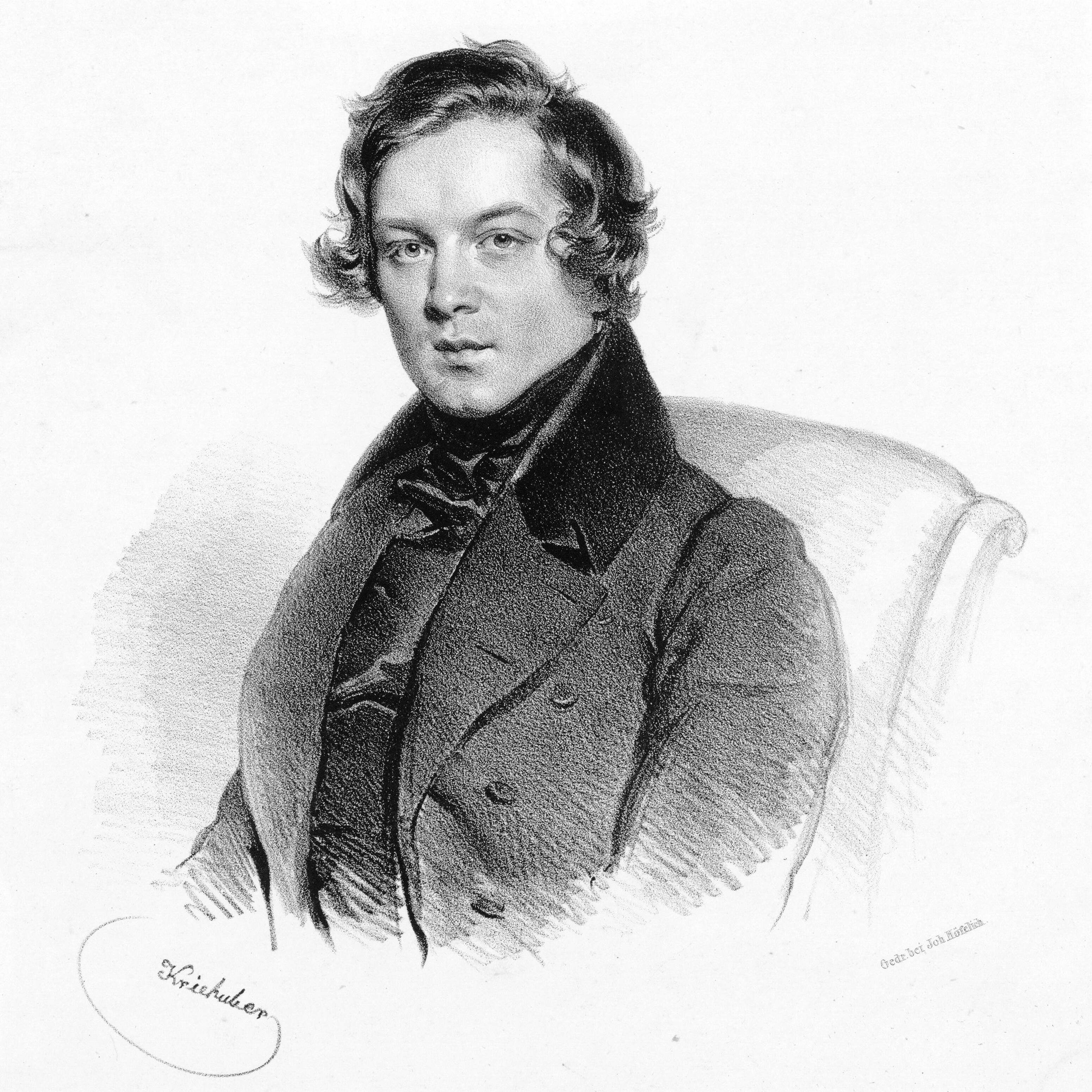
Schumann was Romanticism's great divided soul—a composer torn between the impulsive Florestan and contemplative Eusebius (his own invented alter egos), whose music veers between passionate outbursts and inward poetry. His works capture the Romantic spirit of emotional extremes, literary allusion, and psychological depth, cut tragically short by mental illness.
4 concerts featuring works by this composer

Never miss a Schumann performance
Get notified when new concerts are announced near you
New to Robert Schumann? These works make great entry points.
Kinderszenen (Scenes from Childhood), Op. 15
Thirteen miniatures including 'Träumerei'—they're accessible, beautiful, and capture Romantic nostalgia perfectly.
Piano Concerto: First Movement
Fifteen minutes that show his gift for melody and piano-orchestra dialogue—immediately appealing.
Dichterliebe: 'Im wunderschönen Monat Mai'
The opening song is two minutes of perfect yearning—an ideal introduction to his Lieder.
Add to Spotlight to be notified when a piece is scheduled near you.
The works that define Robert Schumann's legacy.
A piano cycle of character pieces depicting carnival scenes and musical portraits—it's Schumann's imagination in kaleidoscopic form.
One of the great Romantic piano concertos, balancing intimacy with orchestral dialogue—it's passionate and poetic.
A song cycle setting Heine that's the pinnacle of German Romantic Lied—16 songs of love, loss, and irony.
Musical style, influences, and more
Schumann writes music of mercurial character shifts and psychological complexity—sudden mood changes, fragmented themes, and a certain improvisatory quality even in carefully structured works. His piano writing is idiomatic but unconventional, favoring middle registers and complex voicings. His harmonies are chromatic and expressive, his rhythms often create metrical ambiguity, and his forms favor cycles and character pieces over classical structures.
He worshipped Beethoven and learned symphonic form from him. His literary background (his father was a publisher) shaped his approach to program music and character pieces. He married Clara Wieck, one of the great pianists, whose playing influenced his piano writing. He championed Brahms, Chopin, and Berlioz as critic. Mendelssohn was friend and colleague.
His 1830s were devoted almost exclusively to piano music—character pieces and cycles that defined Romantic piano literature. 1840 was his 'year of song' when he married Clara and wrote over 100 Lieder. The 1840s brought orchestral works including symphonies and concertos. His final years saw increasing mental instability, attempted suicide, and confinement in an asylum where he died.
Schumann injured his hand with a device meant to strengthen his fingers, ending his piano virtuoso dreams and redirecting him fully to composition—he claimed the injury was mechanical, but scholars suspect it may have been an early symptom of the mental illness that eventually killed him. The injury that destroyed one dream created the composer we know.
Schumann was a major music critic who founded and edited the Neue Zeitschrift für Musik—his critical writings championed Romantic music and introduced Brahms to the world with the prophetic article 'New Paths.'
Schumann is evergreen—his Piano Concerto, piano cycles, and songs appear constantly on programs. The symphonies are regularly programmed despite debates about his orchestration. His chamber music is repertoire standard. He's absolutely central to the Romantic canon and shows no signs of diminishing in importance or popularity.
156 works in catalog
Browse the catalog below. Add any work to your Spotlight to track when it is performed live.
Showing 30 of 156 works