1
Serenade in F Major, Op. 31 — Reverenza
The gentle, swaying opening movement draws you in immediately with its singing melody and warm orchestral glow.
1871–1927
66 works
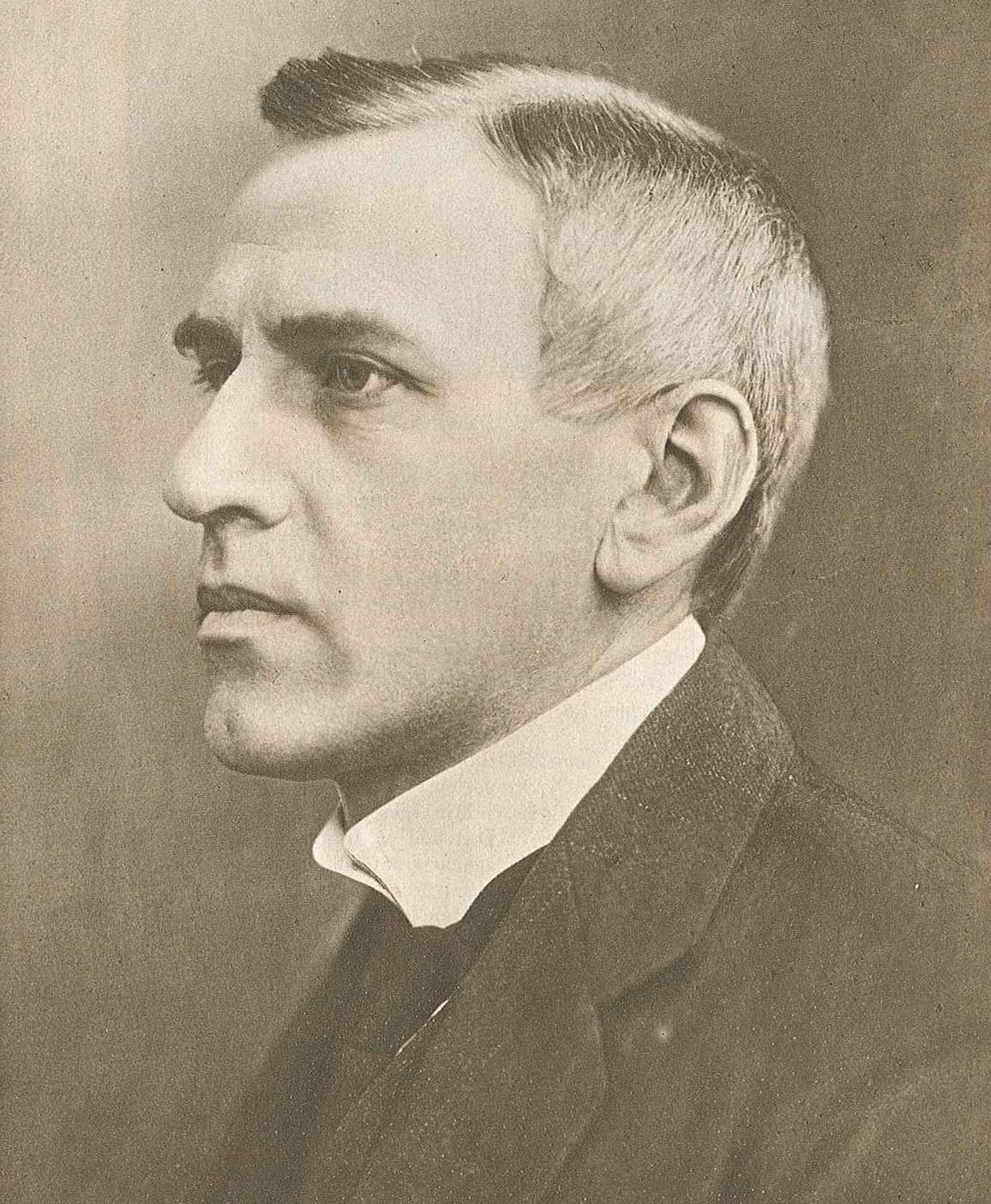
Wilhelm Stenhammar is Sweden's great Romantic secret — a composer whose two symphonies, piano concertos, and ravishing Serenade for Orchestra rival Sibelius in quality if not yet in fame. A brilliant pianist and conductor who led the Gothenburg Orchestra for over a decade, he wrote music of noble sweep, luminous orchestral color, and a distinctly Nordic emotional landscape — autumnal, expansive, and deeply felt. He's one of the most rewarding undiscovered Romantics in the repertoire.
0 concerts featuring works by this composer
No upcoming performances scheduled for works by Wilhelm Stenhammar.
New to Wilhelm Stenhammar? These works make great entry points.
The gentle, swaying opening movement draws you in immediately with its singing melody and warm orchestral glow.
If you love Romantic piano concertos, this one delivers melody, drama, and virtuosity in abundance — an instant favorite for fans of Rachmaninoff.
Interlude from the cantata Sången (The Song)
A brief, gorgeous orchestral interlude that distills Stenhammar's Nordic lyricism into its most concentrated form.
Add to Spotlight to be notified when a piece is scheduled near you.
The works that define Wilhelm Stenhammar's legacy.
Stenhammar's orchestral masterpiece — five movements of luminous, singing beauty that capture the spaciousness of the Nordic landscape with irresistible warmth.
A powerful, nobly wrought symphony that rivals the best of Sibelius — dark, searching, and ultimately triumphant.
A Romantic piano concerto of great beauty and virtuosity that deserves a place alongside Brahms and Rachmaninoff in the repertoire.
Musical style, influences, and more
Stenhammar's music evolves from a Brahmsian-Wagnerian late Romanticism to a more personal idiom inflected by Nordic light and landscape, with hints of the modal and folk-music elements his friend Nielsen was exploring. His orchestration is warm and full-bodied, with a particular gift for luminous string writing. His formal sense is expansive — his best works unfold with a spacious grandeur that evokes the Swedish landscape — and his harmonic language balances Romantic richness with increasing clarity.
Stenhammar worshipped Beethoven and was initially shaped by Brahms and Wagner before finding his own Nordic voice. His close friendship with Sibelius was mutually enriching — the two exchanged ideas and supported each other's work. He admired Nielsen's formal innovations. As conductor of the Gothenburg Orchestra, he built it into Sweden's finest ensemble, championing contemporary music alongside the classics.
Stenhammar's early works — including songs, piano pieces, and the first version of the Piano Concerto — were lush Romantic statements. His middle period saw a gradual Nordic clarification, with the Serenade and Second Symphony representing his mature synthesis. His late works, including the String Quartet No. 6, move toward greater austerity and contrapuntal complexity. His premature death at 56 cut short what appeared to be a continuing evolution.
Stenhammar was so self-critical that he withdrew and destroyed several early works, including his first Piano Concerto in B-flat minor after its successful premiere — he later rewrote it entirely. His friend Sibelius reportedly told him he was too harsh on himself, but Stenhammar felt that only music meeting the highest standards deserved to survive. The irony is that his surviving works more than meet those standards.
Stenhammar's six string quartets constitute one of the finest quartet cycles from Scandinavia — they chart his stylistic evolution from Romanticism to a more austere, contrapuntal late style and deserve to be as well-known as the quartets of Grieg or Nielsen.
Stenhammar is well-known and regularly performed in Sweden but remains virtually unknown elsewhere — a situation that recordings by Neeme Järvi, Herbert Blomstedt, and others are slowly correcting. The Serenade and Second Symphony are his best advocates for international audiences. He's ripe for the kind of rediscovery that brought Sibelius and Nielsen to wider prominence, and any orchestra willing to champion him will find grateful audiences.
66 works in catalog
Browse the catalog below. Add any work to your Spotlight to track when it is performed live.
Showing 30 of 66 works