1
Concerto for Orchestra
Vivid, energetic, and endlessly inventive — the ideal entry point for anyone who loves great orchestral color and doesn't yet know Lutosławski.
1913–1994
1 work
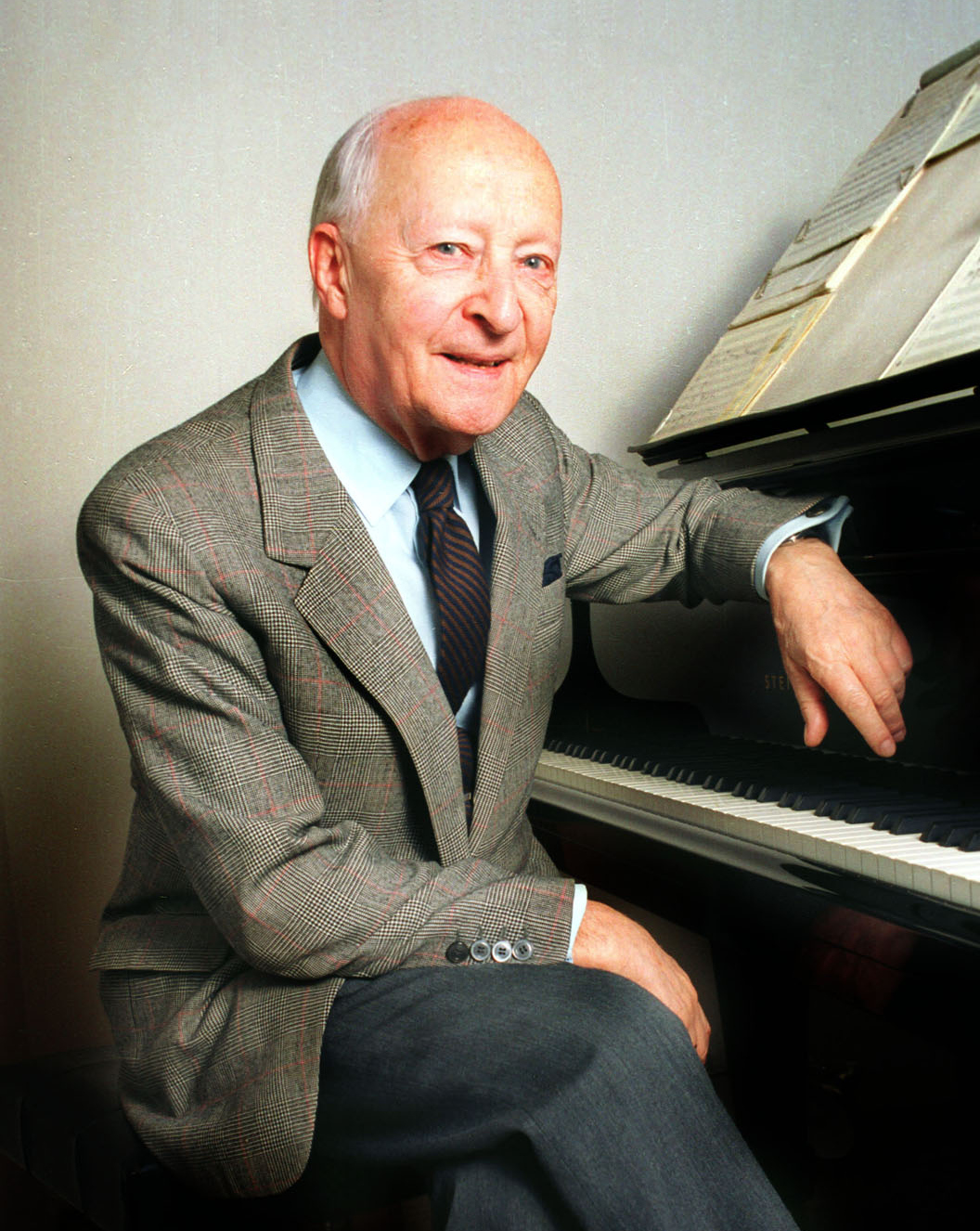
Witold Lutosławski was one of the supreme orchestral composers of the 20th century — a Polish master whose music achieves an extraordinary balance between compositional control and performer freedom, creating textures of shimmering complexity and dramatic arcs of overwhelming power. His Third Symphony, building from a whisper to a devastating climax, is one of the great orchestral experiences of modern music. He combined the rigor of a great architect with the passion of a born dramatist.
0 concerts featuring works by this composer
No upcoming performances scheduled for works by Witold Lutosławski.
New to Witold Lutosławski? These works make great entry points.
Concerto for Orchestra
Vivid, energetic, and endlessly inventive — the ideal entry point for anyone who loves great orchestral color and doesn't yet know Lutosławski.
Variations on a Theme of Paganini for Two Pianos
Dazzling, virtuosic, and fun — a wartime survival piece that's the most immediately accessible work in his catalog.
Symphony No. 3
Its dramatic arc — from silence to overwhelming climax — is so physically compelling that it converts listeners who think they don't like modern music.
Add to Spotlight to be notified when a piece is scheduled near you.
The works that define Witold Lutosławski's legacy.
Symphony No. 3
A work of overwhelming cumulative power — from a single repeated piano note to one of the most devastating orchestral climaxes ever composed, this is Lutosławski's undisputed masterpiece.
Concerto for Orchestra
A brilliantly colorful orchestral showcase that established Lutosławski's international reputation and remains one of the most exciting orchestral works of the postwar era.
Piano Concerto
A late masterpiece that places a singing, virtuosic piano against Lutosławski's shimmering aleatoric orchestra — dramatic, lyrical, and profoundly satisfying.
Musical style, influences, and more
Lutosławski invented 'controlled aleatoricism' — a technique where individual musicians play freely within precisely composed structures, creating complex, shimmering textures that sound spontaneous yet serve the composer's dramatic design. His harmonic language is based on carefully selected interval combinations that give each work a distinctive sonic color. His orchestration is among the most refined and luminous of the century, and his sense of large-scale form — building tension across entire movements toward climactic releases — is unmatched.
Bartók's rhythmic vitality and folk-music integration profoundly shaped Lutosławski's early music. A chance hearing of Cage's aleatory music in 1960 triggered his revolutionary controlled-chance technique — taking Cage's idea of liberation and turning it to opposite ends. Debussy's orchestral sensibility and Szymanowski's richness were lasting influences. As Poland's leading composer, he mentored younger figures including Penderecki and inspired a generation of European composers.
Lutosławski's early career under Soviet-imposed socialist realism produced folk-influenced works of genuine charm (the Concerto for Orchestra). The post-1960 aleatoric breakthrough liberated his mature style, producing Jeux vénitiens, the Second Symphony, and Livre pour orchestre. The 1980s-90s brought his greatest works — the Third and Fourth Symphonies, the Piano Concerto, Chain 2 — achieving a synthesis of freedom and control, intellect and passion, that stands as one of the great accomplishments of 20th-century music.
The premiere of the Third Symphony by the Chicago Symphony under Georg Solti in 1983 was one of the great orchestral events of the decade. The symphony begins with a single, repeated note on the piano — a knock on the door, Lutosławski called it — and builds over thirty-five minutes to a climax of shattering power. The audience reportedly sat in stunned silence before erupting into a prolonged standing ovation. It won the Grawemeyer Award and is now recognized as one of the century's supreme orchestral achievements.
Lutosławski's vocal works — particularly Les Espaces du sommeil for baritone and orchestra and the charming Chantefleurs et Chantefables — reveal a poetic, intimate side that his monumental orchestral reputation sometimes obscures. He was a sensitive, literate musician whose favorite poets included Desnos and Michaux.
Lutosławski is firmly established in the international orchestral repertoire — the Concerto for Orchestra is a standard work, and the Third Symphony is increasingly recognized as essential modern repertoire. Polish orchestras champion his complete catalog. The Piano Concerto and Chain 2 receive regular performances from major soloists. He's trending upward as orchestras seek compelling 20th-century works that audiences genuinely enjoy. The Paganini Variations are a two-piano staple.
1 works in catalog
Browse the catalog below. Add any work to your Spotlight to track when it is performed live.
Showing 1 of 1 works