1
Concerto for Orchestra
Brilliant, accessible, and endlessly entertaining — Bartók's influence filtered through a distinctly Polish sensibility, with vivid orchestral colors and infectious energy.
1913–1994
56 works
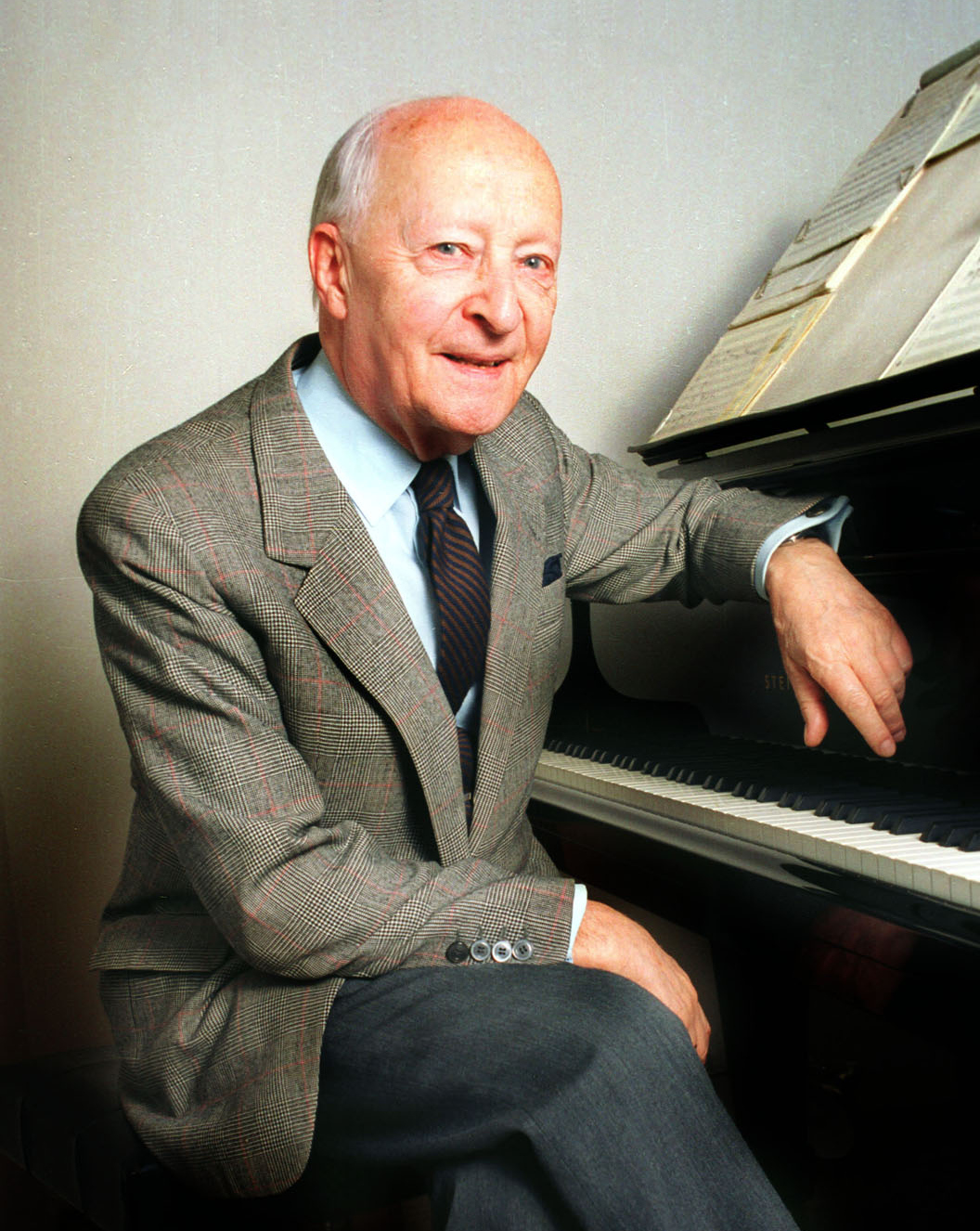
See entry for Witold Lutosławski — this is an alternate transliteration of the same composer's name. Witold Lutosławski (with the Polish ł) was one of the towering figures of 20th-century music.
0 concerts featuring works by this composer
No upcoming performances scheduled for works by Witold Lutoslawski.
New to Witold Lutoslawski? These works make great entry points.
Brilliant, accessible, and endlessly entertaining — Bartók's influence filtered through a distinctly Polish sensibility, with vivid orchestral colors and infectious energy.
Variations on a Theme of Paganini for Two Pianos
A dazzling virtuoso showpiece born of wartime café performances — immediately exciting and requiring no knowledge of modernism to enjoy.
Despite its modernist language, its dramatic trajectory is so compelling that first-time listeners are swept up in its cumulative power.
Add to Spotlight to be notified when a piece is scheduled near you.
The works that define Witold Lutoslawski's legacy.
Lutosławski's masterpiece — a two-movement symphony of overwhelming cumulative power that builds from whispered fragments to a shattering orchestral climax.
A dazzling orchestral showcase in the Bartók tradition that established Lutosławski's international reputation — brilliant, colorful, and endlessly inventive.
Chain 2 — Dialogue for Violin and Orchestra
A concerto in all but name that epitomizes Lutosławski's late style — the solo violin in passionate dialogue with aleatoric orchestral textures.
Musical style, influences, and more
Lutosławski developed 'controlled aleatoricism' — a revolutionary technique where individual parts are freely performed within composed structures, creating textures of shimmering complexity. His harmonic language evolved from folk-influenced neoclassicism through twelve-tone experimentation to a unique system of interval-based harmony. His orchestration is luminous and precisely calibrated, with a particular gift for creating large-scale dramatic arcs from accumulating textural energy.
Bartók's folk-music integration shaped Lutosławski's early works, while Cage's chance music (heard in a 1960 broadcast) paradoxically inspired his controlled aleatoric technique — using chance to enrich texture without surrendering compositional control. Debussy's orchestral color and Szymanowski's harmonic richness were early influences. He became the most important Polish composer since Chopin and influenced generations of younger composers worldwide.
Lutosławski's early works were folk-influenced and neoclassical, shaped by wartime restrictions under both Nazi and Soviet occupation. The Concerto for Orchestra (1954) established his international reputation. After 1960, his aleatoric breakthrough produced Jeux vénitiens, the String Quartet, and increasingly ambitious orchestral works. His late masterpieces — the Third and Fourth Symphonies, the Piano Concerto — achieve an extraordinary synthesis of controlled freedom and dramatic power.
Lutosławski developed his revolutionary aleatoric technique after hearing a radio broadcast of John Cage's Concert for Piano and Orchestra. While he fundamentally disagreed with Cage's philosophy of surrendering compositional control to chance, the broadcast triggered an epiphany: individual performers could play freely within composed frameworks, creating complex textures impossible to notate precisely. The result transformed his music and influenced the entire European avant-garde.
During the Nazi occupation of Warsaw, Lutosławski and fellow composer Andrzej Panufnik performed piano duets in cafés to survive — these wartime performances led to Lutosławski's Variations on a Theme of Paganini for two pianos, which remains one of his most popular and accessible works.
Lutosławski is a major figure in the orchestral repertoire — the Concerto for Orchestra is widely performed, and the Third Symphony increasingly so. The Paganini Variations are a two-piano recital staple. His music is championed by Polish orchestras and conductors worldwide. He's well-established in Europe and growing in American programming. Anniversary years consistently prompt increased performance activity.
56 works in catalog
Browse the catalog below. Add any work to your Spotlight to track when it is performed live.
Showing 30 of 56 works